Friday, August 20, 2010

China and Saudi Arabia

1. Political Relations
Chinaand Saudi Arabiasigned the Memorandum of Understanding on Mutual Establishment of Trade Representative's Office on November 11, 1988. Trade representatives from the two countries assumed their posts in 1989. On July 21,1990, Chinaand Saudi Arabiasigned a Communiqué and announced the establishment of diplomatic relations between the two countries. The Chinese Consulate General in Jeddah opened on April 25, 1993. In April 1998 Chinaagreed on the establishment of the Consulate General in Hong Kongby Saudi Arabia.
Since the establishment of diplomatic relations, important exchanges of visit by the leaders of the two countries include:
Saudi Arabian official who visited China are as follows:Foreign Minister Faisal (in the capacity of King Fahd Ibn Abdul-Aziz's special envoy in September 1990), Undersecretary of Foreign Ministry Thonayan (in the capacity of King Fahd's special envoy in December 1990), Minister of Finance and National Economy Aba Al Khail (November 1992), Minister of Commerce Sulaiman Salaim (Mar 1994), Minister of Oil Hisham Nazer (May 1994), Chairman of Consultative Council Jubil (October1995), Minister of Oil Naimi (December1995 and October.1997), Minister of Finance and National Economy Assaf (February 1996), Deputy Foreign Minister Mansori (October 1996), Minister of Higher Education Anqari (October 1997), Minister of Commerce Faqih (Junuary1998 and September1999), Crown Prince and Deputy Prime Minister, Commander of the National Guards Abdullah (October 1998), Emir of Riyadh District Salman (April 1999), Minister of Information (February 2000), Minister of Agriculture and Water Conservancy (April, 2000), Second Vice Prime Minister of National Defense, Aviation Sultan Bin Abdul-Aziz (October 2000) and Vice Foreign Minister Madani (May 2001), Hamid, Chairman of the Consultative Conference of Saudi Arabia (April 2002), Minister of Higher Education Anqari (December 2002), and President of China-Saudi Friendship Association and Chairman of Saudi Arabian Council of Industry and CommerceHilashi (January 2003).
Major visits to Saudi Arabia by Chinese officials are as follows:State Councilor and Foreign Minister Qian Qichen (July.and November 1990), Premier Li Peng (July 1991), President of the Chinese People's Association for Friendship with Foreign Countries Han Xu (November 1992), Vice Premier Li Lanqing (June 1993), Vice Foreign Minister Tian Zengpei (June 1994 and January 1997), State Councilor and Secretary-General of the State Council Luo Gan (August 1995), Vice Chairman of the Central Military Commission of the CPC Central Committee, State Councilor and Defense Minister Chi Haotian (June 1996), Vice Chairman of the Chinese People's Political Consultative Conference (CPPCC) Ye Xuanping (November 1996), Vice Foreign Minister Ji Peiding (May 1999), President Jiang Zemin (October 1999), Vice Governor of Hebei Province Guo Shichang (February 2001), Vice Minister of the General Administration of Sport Yu Zaiqing (April 2001), President Wang Tao of the Sino-Saudi Friendship Association (October 2001) Vice Governor of Hebei Province Guo Shichang (Feb. 2001),Vice Minister of the General Administration of Sport Yu Zaiqing (Apr. 2001), President Wang Tao of the Sino-Saudi Friendship Association (October 2001),State Councilor Wu Yi (April 2002), Vice Foreign Minister Yang Wenchan (October 2002), and Minister of Water Resources Wang Xucheng (October 2002).
The two countries founded Sino-Saudi Friendship Association and Saudi-Sino Friendship Association respectively in October 1997.
2. Trade Relations, and Economic and Technological Cooperation
The bilateral trade volume has achieved a steady growth since the establishment of diplomatic relations between Chinaand Saudi Arabia. The trade volume between the two countries grew from US$290 million in 1990 to US$5.1 billion in 2002, of which China's export was US$1.67 billion and import US$3.43 billion. China's main exports to Saudi Arabiaare garments, mechanical and electronic products, and textile, etc. Chinamainly imports from Saudi crude oil, liquefied petroleum gas, and primary plastics.
Since 1989, the China Council for the Promotion of International Trade has held six Chinese export commodity fairs in Saudi Arabia. In February 1996, the first meeting of the Sino-Saudi Joint Commission on Economic, Trade and Technologic Cooperation was held in Beijing. In November 1999, the second such meeting was held in Riyadh, Saudi Arabia. In August 2001, the trade office of the Saudi Embassy in Chinawas established.
3. Exchanges in the Fields of Youth, Culture, and Information.
In May 2002, the Cultural Delegation of the Chinese Government headed by Vice Minister of Culture Zhou Heping visited Saudi Arabia.
In May 2002, the Chinese photo exhibition entitled "The World Heritages in China" was held at the King Fahd Cultural Center of Saudi Arabia.
In June 2002, the Chinese Information Delegation led by Deputy Director Wang Guoqing of the State Council Information Office visited Saudi Arabia.
4. Chinese Muslims' pilgrimage to Saudi Arabia
From 1955 to 1964, Chinasent Muslims every year to Saudi Arabiafor pilgrimage. The pilgrimage was suspended for a period of time. In 1979, Chinaresumed the pilgrimage activities.The number of people going to Saudi Arabiafor pilgrimage was about 5,000 in 2002 and the number is expected to reach 10,200 this year.
5. Communiqués and Important Bilateral Agreements Signed by the Two Countries
The Communiqué on the Establishment of Diplomatic Relations between Chinaand Saudi Arabia(July 21, 1990)
The Agreement on Economic, Trade, Investment and Technological Cooperation between Chinaand Saudi Arabia(November 1992)
The Exchange of Notes on Mutual Rendering of the Most Favored Nation Treatment between Chinaand Saudi Arabia(December 1993)
The Agreement on Mutual Promotion and Protection of Investment between Chinaand Saudi Arabia(February 1996)
The Memorandum of Economic and Trade Cooperation between Chinaand Saudi Arabia(October 1998)
The Agreement on Educational Cooperation; The Agreement on Radio and Television Cooperation between China's Radio and Television Bureau and Saudi Arabia's Ministry of Information; The Agreement on Information Exchange and Cooperation between China's Xinhua News Agency and Saudi Arabia News Agency;The Memorandum of Understanding on Petroleum Cooperation between China and Saudi Arabia (October 1999).
The Agreement on Water Conservancy Cooperation between the Government of the People's Republic of Chinaand the Government of Saudi Arabia (October 2002)
The Agreement on Cultural and Educational Cooperation between China and Saudi Arabia (December 2002)

Thursday, August 19, 2010

Pakistan's Future ICBM

I think Pakistan Must develop & well develop its ICBM Capability.
Reasons are as under according to my personal view:

Pakistan would be able to hit more high value targets and potential threats within a wide range.

Other enemies than India would have to think 100 times before they try to bring any aggression to us.

Pakistan will stand high in Islamic Ummah & they will feel a bit more secure

India would develop its strategic assets in future Far away from its borders , Pakistan would be able to take'em Out.

It will kick start Its Space Industry , and we are going to put 2 satellites By 2011 Inshallah.

it would have a psychological impact on any aggressor nation .

Israel is not our most important Target but it is a potential Target if they Keep threatning us and calling us the supreme Enemy , then we must think about them too but by not being over provoked !!

Pakistan will join the list of ICBM capable Nations list.

Most important thing in this regard is that we must not listen to "Loud mouth" Individuals arround us , suggesting us not to have an ICBM , " How come they can know better than us about our Intrests?"

Top 10 Modern Assault Rifles


Saturday, August 14, 2010

15 year old boy made a history to become soldier of Pakistan Army


15 year old boy made a history to become soldier of Pakistan Army


On the 63rd Independence day Master Abdul Basit a 15 year old boy madea history to become soldier of Pakistan Army for a day. The young,patriotic lad, who is suffering from blood cancer had expressed hisdesire to Chief of Army Staff, General Ashfaq Parvez Kayani through anNGO "Make A Wish Foundation" that he wanted to be soldier of PakistanArmy, may be for a day. Chief of Army Staff, General Ashfaq ParvezKayani took special interest and allowed the child to become a soldierfor a day and spend time in a unit on the Independence Day of Pakistan.


Master Abdul Basit, though very weak and fragile, because of hisailment put on the uniform like a professional soldier and reported tounit of Punjab Regiment at Malir Cantt Karachi. The young soldier waswarmly welcomed at the unit. Later, Master Abdul Basit spent a busy daywith officers and men of his unit.

Master Abdul Basit after a day’s work with soldiers said that his lifetime dream to join Pakistan Army has come true and he cherished everyminute spent with the soldiers.
Master Basit, 15 years old boy who is suffering from blood cancer,coming to join an army unit at Malir Cantt Karachi for a day. MasterBasit desired to become a soldier of Pakistan Army. He has beenpermitted by Chief of Army Staff, General Ashfaq Parvez kayani tobecome a soldier of Pakistan army for a day. (14-8-2010).
Major General Asfand Yar Patodi, General Officer Commanding presentingsouvenir to Master Basit who became soldier of Pakistan Army for oneday. Master Basit is suffering from blood cancer and he desired tobecome a soldier of Pakistan Army may be for one day. COAS, GeneralAshfaq Parvez Kayani permitted Master Basit to become soldier inPakistan Army for a day. 

Wednesday, August 11, 2010

South Korea's Utility Helo Makes Maiden Flight


SEOUL - The first prototype of the Surion utility helicopter, co-developed by Korea Aerospace Industries (KAI) and Eurocopter, successfully completed its first flight March 10, about seven months after its rollout, South Korea's Defense Acquisition Program Administration (DAPA) announced.
The 30-minute flight took place at an air base in Sacheon, some 430 kilometers (about 265 miles) southeast of Seoul, before a crowd of about 160 guests, the agency said in a news release.
Two test pilots and an engineer maneuvered the 8.7-metric-ton aircraft through taxi, hover and hover turns. The helicopter performed a stationary hover at 30 feet, the release said.
"The Surion will be test-flying at an altitude of 2,000 feet and a cruising speed of 140 knots by April," a DAPA spokesman said. "A full-scale flight test will begin in May before initial production in late 2010."

Wednesday, July 28, 2010

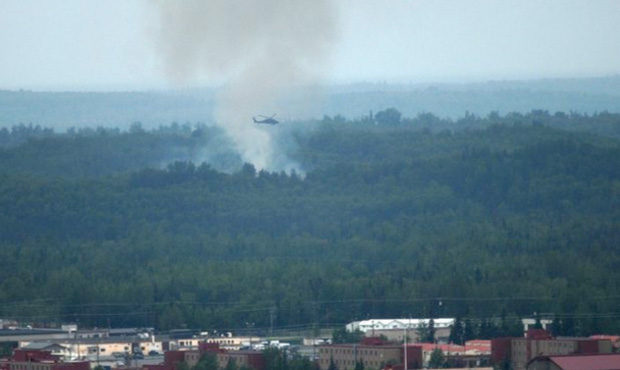
c-17 globemaster iii crash


A Boeing C-17 Globemaster III, operated by the United States Air Force, crashed on Wednesday near Elmendorf Air Force Base in Alaska at about 6:15 pm (0215 Thursday UTC), killing all four crew members. The plane was practicing for the 2010 Arctic Thunder air show.
These facts were confirmed by Air Force Lt. Gen. Dana Atkins, Commander of Alaskan Command NORAD, in an impromptu press conference later in the evening. Col. John McMullen, commander of the 3rd Wing (under whose authority the plane belonged), announced the four deaths on Thursday. Three were members of the U.S. Air National Guard, one was active duty. Names are being withheld pending the notification of family members.
The Elmendorf base is near Anchorage, Alaska, and the fireball and plume were visible from that city's downtown. "It was a big, gray plume of smoke and I saw a fireball go up in it," said Anchorage Fire Dept. Captain Bryan Grella in an interview with the Associated Press.
The Boeing C-17 Globemaster III aircraft is designed for rapid response strategic airlift, medical evacuation, and airdrop roles, carrying cargo and troops. The aircraft are used by the United States, the United Kingdom, NATO, Australia, Canada, and Qatar.


Monday, July 5, 2010

JF 17 - Pakistan's Pride

A new aircraft programme for Pakistan has brought benefits not only to the air force but to its aerospace industry. Air Commodore Azfar A Khan (retd) describes how and why the aircraft that marks a milestone in the aviation history of Pakistan was developed.

When the time came to replace its large, obsolete fleet with modern, lightweight, multi-role combat aircraft, the Pakistan Air Force (PAF) opted for a low-cost solution and not pricier Western designs. The result was an aircraft that could be manufactured in Pakistan in collaboration with the People's Republic of China - the lightweight fighter bomber JF-17 Thunder.
Developed by the Pakistan Aeronautical Complex and Chengdu Aircraft Industry, China, production is being undertaken at Pakistan Aeronautical Complex, Kamra.
The PAF officially inducted its first JF-17 squadron on 18 February this year. Initially, about 10 to12 squadrons are to be produced, but the PAF will ultimately acquire up to 250 pieces. From 2011, 15-16 aircraft will be produced annually, which may eventually be increased to 25 per year.
It is hoped the JF-17 will provide a low-cost replacement for a number of developing countries currently operating ageing MiG-21/F-7 and F-5 aircraft, such as Azerbaijan, Algeria, Sudan, Zimbabwe, Bangladesh, Egypt, Iran, Lebanon, Malaysia, Morocco, Myanmar, Sri Lanka and Nigeria. Some of these nations have already confirmed orders.
Specification
The JF-17 is powered by a single Russian RD-93 turbofan engine, a widely used model known to be reliable. The turbofan design gives more thrust and significantly lower specific fuel consumption than a turbojet engine. The engine has gained attention for its acceleration and quick response, with test pilots describing reactions as "virtually instantaneous". Using a single engine also significantly reduces both maintenance time and cost.
"Initially, about 10 to12 squadrons are to be produced, but the PAF will ultimately acquire up to 250 pieces."
The aircraft can be armed with up to 3,629kg (8,000lb) of air-to-air and air-to-ground ordnance along with other equipment mounted externally on the aircraft. The glass cockpit, meanwhile, incorporates an electronic flight instrument system (EFIS) and a wide-angle head-up display (HUD), and it has a minimum total field of view of 25 degrees. The EFIS provides basic flight information, as well as tactical, engine, fuel, electrical, hydraulics, flight control and environment control systems information. The HUD and multi-function display (MFD) are 'smart' (meaning they can be configured by the pilot to show any of the available information), the avionics system is all-digital and fully integrated, and the solid state avionics is of a modular design.
Several radars were tested onboard prototypes of the JF-17, including Israel's Elta EL/M-2032, Russia's Phazotron Super Komar, Italy's FIAR Grifo-S7, Brittain's GEC-Marconi Blue Hawk and France's Thomson-CSF RC-400. However, a Chinese radar was selected for the first batch of craft, although Italy and France are in the running for future contracts, according to reports.
The software written for the avionics comprises more than one million lines of instructions, making use of the concept of open architecture. This software is written using the popular civilian C++ programming language, rather than a military language such as Ada, to better utilise the large number of civilian software programmers available in the market.
Building
The production of JF-17 parts and components begun as far back as 2005 and manufacture of its sub-assemblies started in 2008. The production of major assemblies is undertaken by Pakistan's large public sector units (PSUs), while parts and components are provided by private-sector suppliers.
Pakistan has a highly skilled and trained technical workforce - a prerequisite for the manufacture of an indigenous aircraft - that can be cheaper to employ when compared with other areas around the world. For example, some of the workforce deployed for the production of the JF-17 are retired personnel from the Pakistan Air Force. This manpower is available at a rate of $10 per hour whereas the international market can charge up to $45 per hour.
"The total cost of the JF-17 programme is US$500m."
It is this cost-effectiveness that led the PAF to take on the task of making its own aircraft. The unit production cost of a JF-17 translates into approximately US$15 million apiece whereas a multi-role aircraft in the international market is available for US$50m a piece. Overall, the total cost of the JF-17 programme is US$500m, divided equally between China and Pakistan.
Furthermore, Pakistan will earn a good exchange rate through the sale of this aircraft and its associated spares to other countries, keep its retired aircraft workers employed, and provide the country's internal market with new opportunities to build technologies and develop new innovations.
  Main A JF-17 on display at the IDEAS 2008 defence exhibition in Karachi, Pakistan.

Monday, June 21, 2010

Philippine Army Looking For 155mm Howitzer

DND Shopping Around for Heavy Weapons, Trucks

MANILA, Philippines - The Department of National Defense (DND) is in the market for heavy guns as well as military trucks for the Philippine Army (PA) in line with its ongoing efforts to modernize the military.

While there was no mention of the exact amount allotted for the procurement, Defense Undersecretary Antonio Romero said they are looking forward to the purchase of 155mm howitzers for the Army.

At present, the Army is heavily dependent on 105mm howitzers, which only have a maximum range of less than 12 kilometers (air distance), for its counterterrorism, counterinsurgency and anti-lawlessness campaign, especially in Mindanao.

The 155 mm howitzers, which have a range of 15 kilometers (air distance), will boost the Army’s reach into enemy lines, considering that most areas of conflict in the country are confined to rugged terrain.

Thursday, May 13, 2010

Pratt & Whitney Delivers F100-229 Engines to Pakistani Air Force


Pratt & Whitney has delivered the first Pakistani Air Force F100-PW-229 Engine Enhancement Package (EEP) engine to Pakistan this week, for installation in their F-16 Block 52 aircraft. 

The engine program is valued at approximately $150 million and is scheduled for delivery in 2009 and 2010. Pratt & Whitney is a United Technologies Corp. company.

“We are honored by the Pakistani Air Force’s decision to continue with Pratt & Whitney as the propulsion for their F-16 Fleet. Building on the legacy of the F100-PW-220 in operation for more than 25 years, we look forward to providing new F100-PW-229 EEP engine to power their latest purchase of F-16s,” said Bill Begert, Vice President of Military Business Development and Aftermarket Services for Pratt & Whitney.

Wednesday, April 28, 2010

Mirage upgrade augments new fighter force

Despite the ongoing acquisition of new F-16s to strengthen its fighter force, Morocco is pressing on with ambitious upgrades to its legacy types, which will remain in service for many years, augmenting the new aircraft.

Upgraded F-5s have already entered service and Morocco ’s MF2000 Mirage F1 upgrade is now flying in prototype form.
The Moroccan Mirage F1 upgrade was designed and is being integrated by the new Association Sagem Thales pour la Rénovation d'Avions de Combat (ASTRAC) consortium. This is a joint venture between Thales and Sagem Défense Sécurité (SAFRAN) and was established in November 2005 at the request of the French Ministry of Defence.
ASTRAC aimed to provide an upgrade for remaining Mirage F1 export customers – principallyMorocco – whose aircraft still enjoyed competitive performance characteristics but whose avionics were dated, and whose operational capabilities were somewhat limited.
Thales brought its experience of the Spanish Mirage F1M upgrade to the project, while SAFRAN has played a major role in a number of Mirage and other combat aircraft upgrades, including the upgrade of French Mirage F1C interceptors to multi-role F1CT fighter-bombers.
The ASTRAC consortium put together an upgrade (using the designation MF2000) which transforms the capabilities of the ageing Mirage F1 in both air-to-air and air-to-ground operations, providing a new multi-mode radar, a laser designation pod, new electronic warfare and self-protection systems and giving compatibility with a range of new weapons.
Much of the upgrade is based on technology developed for the latest Mirage 2000 versions (Mirage 2000-5 and 2000-9). The cockpit is transformed, becoming a modern, digital glass cockpit with two-colour multifunction displays replacing the analogue flight instruments and the old analogue Cyrano IV radar screen. The aircraft is also fitted with a new HUD with a broad panel up front control panel (UFCP) and features full HOTAS controls. The aircraft has two SAGEM mission computers interfaced with a MIL STD 1553B digital databus, and a hybrid Sigma IN/GPS. The MF2000 has new secure voice radios, and the cockpit is compatible with a helmet mounted sighting system. Finally, the pilot sits on a modern zero-zero capable ejection seat.
The upgraded Mirage F1 is fitted with a Thales RC400 (RDY3) multi-mode pulse Doppler radar. This is based on the Mirage 2000-5’s RDY radar, but with a smaller antenna giving shorter range.
The Mirage F1’s electronic warfare capabilities are similarly enhanced, with a new digital radar warning receiver (RWR) and an external PAJ FA ECM pod designed to detect, classify and counter search, fire-control, and missile seeker radars. The aircraft is also fitted with Corail flare launchers and Phimat chaff dispensers.
The upgraded Mirages retain their internal 30-mm DEFA cannon with 135 rounds per gun, and augment these with a variety of externally carried weapons. For use in the air-to-air role, the MF2000 can carry AIM-9L/M Sidewinder, Magic 2 or IR MICA missiles with MICA EM available for BVR use.
For air-to-ground missions, the MF2000 can carry a wide range of guided and unguided munitions. Use of the Damocles day/night laser designation pod allows the carriage of a variety of laser-guided bombs, but perhaps the greatest expansion to air-to-ground capabilities is provided by the new AASM precision-guided, stand-off rocket-boosted bomb, supported by a mission preparation system provided by Sagem Défense Sécurité and a debriefing system from Thales.
For more specialised missions, the MF2000 is compatible with the ARMAT anti-radiation missile, and with the MBDA AM39 Exocet anti-ship missile.
Though there have been proposals to re-engine the Mirage F1 (with South Africa successfully integrating a derivative of the MiG-29’s RD-33 engine) the MF2000 retains the basic Snecma ATAR 9K50 engine, though this is ‘optimised’ under the so-called ATAR Gratification programme, with a new compressor module, a redesigned HP turbine, a six per cent increase in mass flow and a 40 per cent increase in turbine entry temperatures combining to increase thrust from 7,200 kg to 7,500 kg.
At the Paris Air Salon at Le Bourget, ASTRAC displayed what purported to be an example of the MF2000 in the aircraft static park though, in fact, the aircraft was a loaned Armée de l’Air Mirage F1CT (No.281), with some cockpit modifications. But though the aircraft wore an interesting black and grey camouflage scheme, it was not fully representative of the Moroccan upgrade configuration.
As it had done when undertaking the Spanish Mirage F1 upgrade programme, Thales gave responsibility for incorporating modifications on the real ‘prototype’ aircraft to Belgium ’s SABCA at Charleroi , near Brussels .
In the case of the Moroccan upgrade, the first two aircraft (173 and one other) were upgraded atCharleroi , with the third (150) undergoing modifications in-country. The prototype made its maiden flight on October 19 2009, and flight tests and certification are expected to continue throughout the spring and summer of 2010, before activity transfers to Sidi Slimane.
Some 27 Mirage F1s (a mix of Mirage F1CH, F1EH and probe-equipped F1EH-200) will be upgraded to a common MF2000 standard under the ‘F1 Renovation’ programme, at an estimated cost of $420m US.
It has been claimed that with RDY-3 radar and MICA missiles, the upgraded Mirage F1 enjoyed the same BVR air combat capabilities as the Mirage 2000-5, while the combination of Damocles and AASM transforms the aircraft into a ‘pocket Rafale’ in the air-to-ground role.
Though the Mirage F1 has been retired from service in Greece , Jordan , and will soon bow out of Armée de l’Air service, further upgrade opportunities may exist in Gabon , Libya and perhapsEcuador .
Also, new customers may emerge for the aircraft retired by Jordan (and France), perhaps including Argentina, which was recently reported to be examining a $100 million proposal to buy 12 ex-Jordanian air force Dassault Mirage F1CJ fighters and one F1BJ trainer, having rejected a Spanish offer for a similar number of F1s. The aircraft would replace the Fuerza Aerea Argentina’s surviving Mirage IIIEAs, which are scheduled to be retired in 2012.
ASTRAC hopes that many of the Mirage F1s that will be retired by France and Spain during the next five years will find new customers, and will provide them with a source of upgrade work.

Iranian navy plane flies near USS Eisenhower in Gulf of Oman

Washington (CNN) -- An Iranian navy plane that approached a U.S. aircraft carrier last week was flying as low as 300 feet as it neared the USS Eisenhower, U.S. military officials said Wednesday.
The incident, first reported by CNN on Tuesday, came as Iran was beginning a series of military exercises last week meant to show off their military prowess.
The Eisenhower was on duty in the Gulf of Oman in the northern Arabian Sea, in support of the Afghanistan war efforts, when the Iranian maritime patrol aircraft flew within 1,000 yards of the vessel, according to military officials.
While the encounter was not threatening, it was unusual. U.S. navy ships have regularly encountered Iranian aircraft in the Persian Gulf in recent years, but this encounter took place in the Gulf of Oman, in an area where Iranian jets are seen much less frequently, several Navy officials said.
The officials declined to be identified, citing the extremely sensitive nature of any U.S. military interaction with Iranian forces.
Adm. Gary Roughead, the top Navy officer, confirmed the April 21 incident. The Iranians were "not provocative or threatening. As long as they are professional and not threatening or reckless, it's international space," he said.
Radar on the Eisenhower and other U.S. ships in the vicinity closely tracked the Iranian aircraft as it approached the aircraft carrier to ensure it maintained a nonthreatening path, Roughead said. A senior U.S. military official said the Iranian plane was tracked by U.S. units for nearly 100 miles before it reached the Eisenhower.
The Iranian aircraft was a Fokker F27 that was unarmed, officials said. It remained in the vicinity of the Eisenhower for about 20 minutes before leaving the area, according to the senior official. The Eisenhower had just finished a series of carrier aircraft flight operations and a resupply at sea mission.
U.S. officials believe the Iranians wanted a close look at the carrier, but they could not say if the Iranians took photos of the ship.
One of the officials also said Iran may simply have been trying to demonstrate its aerial capabilities to the United States.
U.S. military officials continue to emphasize that recent encounters with Iranian naval forces in the Persian Gulf have been professional and without confrontation or problems. The U.S. Navy takes great care to try to stay out of the way of any Iranian forces in the region, officials said.

Monday, April 26, 2010

Pak receives second AWAC systems from Sweden

Pakistan has received second of the four Saab-2000 airborne early warning and control system aircraft ordered from Sweden, boosting its capability to monitor Indian airspace.

A statement issued by the Pakistan Air Force said the Saab-2000 aircraft landed at an operational base on Saturday and would shortly be inducted into the fleet.

Two more Saab-2000 aircraft equipped with the Erieye radar system are expected to be delivered to Pakistan by Sweden later this year.

The Dawn newspaper quoted an unnamed official as saying that the Erieye radar system mounted on the turboprop aircraft will enable the PAF to detect "all aircraft taking off and landing at all forward Indian airbases near Pakistan" and to identify the type of the aircraft, their weapons systems and their direction of flight.

The capabilities and range of the radar system will enable the PAF to "receive early warning in case of pre-emptive attacks from across the border," the official said.

Pakistan is also conducting negotiations with China for four more airborne warning and control aircraft and these are expected to be inducted by 2012.

linkwithin

Related Posts Plugin for WordPress, Blogger...
© Copyright 2012-2013 — Asian Defence News. All Rights Reserved