Showing posts with label Pakistan Air Force. Show all posts

Wednesday, January 2, 2013

Pakistan Air Force Crumbling Away

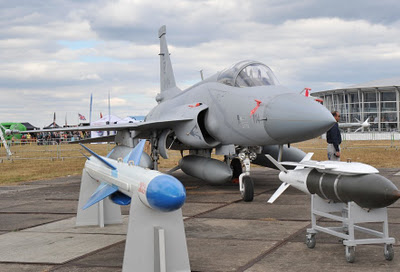
The Pakistan Air Force is losing nearly two percent of its 900 aircraft each year to accidents. This is more than ten times the rate of Western air forces. These losses are caused by aircraft that are too old and a budget that is too small to properly train pilots and maintain the aircraft. Most of Pakistan’s 520 fighters are over 20 years old. This includes 157 French made Mirage IIIs and 5s, 178 of 186 MiG-21s (the Chinese F-7 version), and 31 of 77 U.S. made F-16s. There have been some new aircraft put into service. Since 2000, Pakistan has received 46 F-16s and 100 Chinese made JF-17s (similar to the F-16). These planes are pretty safe. Older aircraft tend to crash more often.
Pakistan does not have enough money to buy enough new aircraft to replace all those becoming inoperable because of age. You can refurbish old aircraft and keep them flying for half a century or more. But Pakistan hasn’t got the money for that either. There’s also not enough cash for the spare parts and fuel needed for the training flights needed to keep the 3,000 Pakistani Air Force pilots capable of handling high-performance aircraft safely. In short, the Pakistani Air Force is facing a disaster. Each year more and more of their aircraft become inoperable and their pilots, unable to fly enough to maintain their skill, become less capable.
Neighboring India has more money for new aircraft and training. And, like Pakistan, it is using its Mig-21s

Wednesday, December 5, 2012

Philippine Loses Chance to Acquire Attack Helicopters

                                       Eurocopter AS555C3 Fennec demostrator for Pakistan Army

The Philippines has lost an opportunity to acquire 10 attack helicopters from France, a defense official said recently.
Department of National Defense (DND) spokesman Peter Galvez said the 10 attack helicopters initially offered by a French firm are no longer available.
The helicopters had been re-offered to Pakistan by the time the DND was given permission to acquire them through negotiations.
“The helicopters were produced for Pakistan. However, Pakistan had some problems with procurement so the helicopters were opened to the market,” Galvez told The STAR.
“We had planned to acquire the helicopters and had to clarify some questions (by agencies overseeing the procurement). By the time we were allowed to acquire the helicopters, Pakistan had initiated some moves to rework the procurement,” he added.
These developments prompted French firm Eurocopter to offer the helicopters again to Pakistan.
The helicopters could have been used by the military to defend the country’s territorial integrity and conduct internal security operations.
Despite the apparent setback to its modernization efforts, the DND said it continues to find suppliers that can upgrade the military’s capabilities.
“We are now looking into other short-listed participants from European countries,” Galvez said.
“We are working double-time to meet the time frame we set despite the drawbacks we are encountering,” he added.

Friday, November 23, 2012

Pakistan Planning to Buy Aircraft from Indonesia

Pakistan plan to buy aircraft made ​​in Indonesia that produced PT Dirgantara Indonesia (DI) in Bandung. But Pakistan's plans are not yet known when it will be realized.

Pakistan plan was presented staff khsus president Firmansyah economics in Islamabad, Pakistan, Thursday (22/11). He said the problem peswat purchase becomes a topic for discussion at a bilateral meeting between President Susilo Bambang Yudhoyono (SBY) to the President of Pakistan Asif Ali Zardari.

"The meeting today (Wednesday night, Red) Indonesa discuss increased cooperation with Pakistan in the field of education, economic, and military weaponry. Pakistan would like to purchase a number of military aircraft to strengthen them, "said Firmansyah.

It has not tried to explain the details of the type peswat bought and how much. Hearing is also not touched the estimates used Pakistan to buy the aircraft. "I do not understand the numbers. Less detail last night, "tuturnya.

Friday, November 9, 2012

Pakistan Unveils Domestically Made Drone Aircrafts

Director General (DG) Global Industrial and Defence Solution (DIGS) Wednesday announced that Pakistan has made drone aircrafts capable of surveillance and gathering information .
Talking to media, Air Vice Marshall (rtd) Zubair said that Pakistan-made drone aircrafts had a range of 17,000 feet and it could fly for hours.
“These unmanned aircrafts can be use in any kind of weather,” he said adding that the police and law enforcement authorities would be able to use it against militants.

Friday, September 7, 2012

Pakistan Navy Introduces P-3C Orion

P3C Long Range Maritime Patrol Aircraft Inducted

During an impressive ceremony held earlier Wednesday, Pakistan Navy inducted another P3C Long Range Maritime Patrol Aircraft in its aviation fleet, received from USA under Security Assistance Programme.

A Pakistan Navy press release said that the Chief of the Naval Staff, Admiral M. Asif Sandila, was the chief guest on the occasion. It said that the P3C aircraft, being a potent air platform, will assist in maintaining protracted vigil over sea to meet legitimate defence needs while safeguarding maritime interests of Pakistan. Capacity building of PN is essential to ensure security in North Arabian Sea and keep sea routes safe for maritime community.

Monday, August 20, 2012

Mastermind of PAF Kamra Airbase attack arrested

The mastermind of the Kamra Airbase attack has been arrested. The suspect is believed to have provided financial and logistical support for the airbase attack, DawnNews reported.
The Pakistani Taliban claimed responsibility for the attack at Kamra Airbase on August 16 in which two Pakistani soldiers died, while nine terrorists were killed in the counter attack.

Sources also mentioned that a person named Tajammul was also arrested yesterday from Kunarh area who gave residence to the attacker in his home. Shabaz, another close ally and relative of Tajammul, who also arrested, is also believed to be involved in planning the attack.

Friday, August 17, 2012

PAF Damaged Awacs aircraft repairable’


A nozzle of an Airborne Warning and Control System (Awacs) aircraft was damaged as a rocket-propelled grenade hit it when terrorists stormed Pakistan Air Force (PAF) Airbase Minhas in Kamra on Thursday. However, the aircraft is repairable, Minister for Defence Syed Naveed Qamar said.

“The engineers and technicians of the Pakistan Aeronautical Complex have examined the partially damaged aircraft, and according to the initial report, this most advanced Awacs aircraft of the Saab-2000 category can be repaired,” said the defence minister while talking to The News at an Iftar-dinner hosted by the Iranian ambassador here on Thursday. “A test flight of the aircraft will be conducted after repairing it,” he added.

Thursday, August 16, 2012

Kamra Airbase Attack beyond TTP


Nine armed terrorists equipped with guns and rocket launchers attacked Pakistani air force base before dawn (2:00 Am) on 16 August 2012. Air Force commandos successfully countered and killed all terrorists. The base is known as home to the Pakistan Aeronautical Complex that assembles Mirage and, with Chinese support, JF-17 fighter jets and located about 60 kilometers (37 miles) northwest of Islamabad.

During this operation one security official has martyred. Air Commodore Azam reached to the base and took the charge of the operation and sustained bullet injury while leading his soldiers from the front. According to the public sources, the attack on the facility, “Intense fire” was exchanged between security personnel and the “group of terrorists”. The sources also confirmed that the sound of gun and rocket fire, as well as hand grenades exploding have been be heard inside the base .

Although, TTP (Tehrik-e-Taliban Pakistan, an Indian RAW funded terrorist proxy) has claimed the responsibility for the attack but apparently, the planning, choice of targets i.e. killing troops and damaging spying aircraft and attack timing clearly shows that the attack on the base was beyond the capability of the said Taliban organization. Meanwhile‚ high ups of the PAF are in close contact with Prime Minister Raja Pervez Ashraf and are being regularly informed about the situation.

Eight militants killed in Kamra airbase attack: PAF officials

Heavily armed militants stormed the Pakistan Air Force’s (PAF) Minhas airbase at Kamra during the early hours of Thursday, sparking an intense gun battle lasting almost five hours, 
The militants were said to be armed with automatic weapons, grenades and suicide vests. Intense exchange of fire between militants and security forces ensued after the attackers infiltrated the base, located in Attock, Punjab.
PAF officials confirmed that all eight attackers have been killed. One Pakistani soldier also lost his life in the attack, confirmed officials.
It was not immediately clear how the attackers managed to enter the sprawling base this time.
Although the attack took place at about 2 am, it is likely many of the soldiers on the base were awake for prayers or breakfast during the fasting month of Ramazan.
The gunmen disguised themselves in uniforms and got inside the facility will renew questions about security, particularly at a base which has been attacked twice before.
“Other miscreants then fired RPGs from outside the base boundary wall. As a result one PAF aircraft got damaged,” the air force said in a statement.
Gunfire, rocket and hand grenade explosions were heard during heavy clashes. One officer told AFP that he saw flames after waking up for his pre-dawn meal.

Wednesday, August 15, 2012

PAF jet crashes again in Thal, pilot ejects safely but injured

BHAKKAR: A training fighter jet of Pakistan Air Force (PAF) crashed in Hyderabad Thal area of Bhakkar while the pilot managed to eject safely Wednesday.

According to sources, pilot Farooq was flying the training jet Miraj when it caught fire. Fortunately he managed to eject safely after the jet caught fire and landed safely while the aircraft crashed in a suburban area of Bhakkar.

Monday, August 13, 2012

US arms sales to Pakistan touch $5.4 billion since 2001: Pentagon

US military sales to Pakistan since 2001, including in-process supply of F-16 combat aircraft, are collectively worth about $5.4 billion accordingly to a newly-released report.


Major US arms sales and grants to Pakistan since 2001 have included not only items related to counter-terrorism and counter-insurgency operations, but also a host of big ticket platforms more suited to conventional warfare.
“The Pentagon reports total Foreign Military Sales agreements with Pakistan worth about $5.4 billion for FY2002-FY2010 (in-process sales of F-16 combat aircraft and related equipment account for about half of this),” the report said. It notes that in dollar value terms, the bulk of purchases have been made with Pakistani national funds, but US grants have eclipsed these in recent years.

According to the report, the United States has provided Pakistan with nearly $2.5 billion in Foreign Military Financing (FMF) since 2001. These funds are used to purchase US military equipment for longer-term modernization efforts.
“Pakistan has also been granted U.S. defense supplies as Excess Defense Articles (EDA),” the report says, noting that the long period of discord in US-Pakistan relations beginning mid-FY2011 “has slowed the pace of transfers and deliveries considerably”.
Major post-2001 defence supplies provided, or soon to be provided, under FMF are said to include the following:

  • l Eight P-3C Orion maritime patrol aircraft and their refurbishment (valued at $474 million, four delivered, but two of these were destroyed in a March 2011 attack by Islamist militants);
                                      

Tuesday, June 12, 2012

Pakistan air force plane crashed in SW Balochistan province

A Pakistan air force training plane crashed on Tuesday afternoon in country's southwestern province of Balochistan, local media and officials said.
Both pilots on board, one instructor and a trainee, were safe in the incident as they ejected from the plane before it crashed, Pakistan air force (PAF) spokesman told media.
Earlier reports said that both pilots went missing after the plane crashed.
Local Urdu TV channels quoted PAF official as saying that the training plane crashed at about 02:30 p.m. local time in Othal area of Hub district in Balochistan province.
The plane took off from the PAF Base Masroor, Pakistan's largest airbase located in Mauripur area of southern port city of Karachi.
The Mirage training jet was on a routine training flight over the Hub district when it crashed.
According to PAF spokesman, they have started investigations about the matter.
Local media reported that huge fire erupted when the plane hit the ground.
Civil and army rescue teams and fire fighters rushed to the crash site.
PAF has seen a rise in air crashes in recent months.
On May 17, at least four pilots were killed and five people were injured when two PAF trainer planes crashed after bumping into each other on a training mission in Nowshera, a district some 100 km northwest of the country's capital Islamabad.

Wednesday, June 6, 2012

Pakistan Budget Up For Army , Air Force , Down For Navy

ISLAMABAD — Pakistan’s new defense budget increases funding for the Army and Air Force and slightly decreases it for the Navy, but challenging economic conditions put near-term procurements in doubt.
 
The fiscal 2012-2013 defense budget, in current U.S. dollars, allocates $2.8 billion to the Army, an increase of $128 million; $1.2 billion for the Air Force, an increase of $64 million; and $562 million to the Navy, a $1.4 million decrease from the previous year.
 
The defense budget does not, however, usually include procurement funding and is comprised mainly of wages and running costs with increases fueled by ongoing counterinsurgency efforts.
 
Analyst and former fighter pilot Kaiser Tufail expects no new procurements in the near future.
 
“There is no doubt that the government is facing a very serious funding issue, and modernization programs of all three services are on the back burner,” he said.
 
“Although I’d like to keep politics aside, I suspect the government is keeping quite a bit of money to come up with various gimmicks just prior to the elections as well as during [vote buying], so defense matters are secondary for the time being,” he added.
 
One high-profile Air Force procurement project, the FC-20, a Pakistani-specific variant of the Chinese Chengdu J-10 Vigorous Dragon multirole fighter, may be adversely affected by the poor economic and political climate, he said.
 
Tufail said proceeding with this procurement is “far-fetched for the present.”
 
He also criticized money he says is being wasted on what he considers “ill-conceived projects and operations.” As examples, he lists “sustaining Jacobabad Base,” which he said is being largely resupplied by air, has its entire power supply generated on site and is fully air conditioned, the ongoing Siachen operations, expensive staff cars, and VIP transport jets.
 
“There seems to be no oversight of the Ministry of Defence or any other watchdog body,” he said.
 
There are predictions that the defense budget will continue to incrementally grow, however, some analysts say these predictions are not realistic.
 
“I don’t think we can increase the budget incrementally since the economy is not in such good shape. The largest part of the budget is, of course, spent on salaries and the rest on infrastructure and operations,” Tufail said.
 
“There is nothing in Pakistan’s economic forecast that makes it feasible for an annual increment in line with the present one. But the fact is that, with the withholding of U.S. military aid, the money has to come from somewhere,” said former Australian defense attaché to Islamabad, Brian Cloughley.
 
He also highlighted the effect of escalating operating costs.
 
“I don’t think the world at large quite realizes what extra operating costs the Army is having to bear, with over 150,000 Army and [Frontier Constabulary] troops deployed in the border regions — all because of the U.S. invasion of Afghanistan. The costs of fuel and rations, alone, are staggering. Then there’s the expensive matter of extra sorties by [ground attack fighters] and gunships. Not just the ammunition and ordnance, but the fuel and maintenance bills. People don’t realize what the Afghan war is costing Pakistan.”

Friday, June 1, 2012

Pakistan’s air force to receive defensive electronic warfare system from ITT Exelis through a U.S. Foreign Military Sales deal


 Under the $54 million contract, ITT Exelis will provide its Advanced Integrated Defensive Electronic Warfare System, which integrates digital radar warning receivers and advanced jamming countermeasure systems for protection against surface-to-air and air-to-air weapon systems.Both internal and external systems are now in production, the company said.

Under the FMS the external pod-mounted AIDEWS will be provided for 16 aircraft.
“This pod-mounted system brings electronic warfare technology to our customers at much less expense,” said Rich Sorelle, vice president and general manager of the Exelis Integrated Electronic Warfare Systems business area.

“Since AIDEWS is being adopted by many of our international allies and is based on our modular and scalable EW technology, future upgrade costs are shared and affordable.
“Legacy and new F-16 aircraft fleets share the exact same components for internally mounted and external pod versions, significantly reducing the cost of ownership.”


Exelis Advanced Integrated Defensive Electronic Warfare System (AIDEWS) integrates digital radar warning receivers and advanced jamming countermeasures systems to provide pilots with situational awareness and protection against radar-based threats, including modern surface-to-air and air-to-air weapon systems. This Exelis contract delivers state-of-the-art self-protection to international allied forces aircraft. The AIDEWS system, which uses identical hardware in its internal and external/pod versions is now in full production.

Pakistan Airforce Mirage V crashes again 11th May 2012; pilots safe


Pakistan Air Force paying a heavy toll in terms of Aircraft crashes.

KARACHI: A “Mirage V” fighter aircraft of the Pakistan Air Force (PAF) today crashed near Sonmiani area in Hub soon after taking off from Masroor Air Base in Karachi but both the pilots managed to eject in time.

The Mirage Five jet was on a routine training sortie when it went into a tailspin and started to freefall before going down.

According to sources, PAF authorities have launched an investigation to ascertain as to what caused the air accident.

May 11, 2012

Monday, April 2, 2012

ITT Exelis to supply additional ALQ-211(V)9 pods to Pakistan

ITT Exelis has received a Foreign Military Sales (FMS) contract from the US Robins Air Force Base for the supply of additional pod-mounted ALQ-211(V)9 Advanced Integrated Defensive Electronic Warfare System (AIDEWS) to the Pakistan Air Force (PAF).

The jamming pods, delivered under the $54m FMS contract, will be integrated into PAF's fleet of F-16 Fighting Falcon fighter jets.

Exelis Integrated Electronic Warfare Systems business vice-president and general manager Rich Sorelle said the pod-mounted system brings electronic warfare technology to its customers at much lesser cost.

"Since AIDEWS is being adopted by many of our international allies and is based on our modular and scalable EW technology, future upgrade costs are shared and affordable," Sorelle added.

Developed from the ALQ-211 (V) 4 system, AIDEWS provides pilots with situational awareness and protection against radar-based threats, including modern surface-to-air and air-to-air weapon systems.

The (V)9 pod provides digital radar warning, high-power jamming, threat geolocation and situational awareness using line replaceable units (LRUs) interchangeable with internal AIDEWS systems.

The system has been integrated into a wide variety of US and allied defence rotary-wing and fighter aircraft including the NH-90 helicopter, V-22 Osprey, MH-47, MH-60 Black Hawk, F-16 Fighter and several commercial platforms.

Work under the contract will be performed at the company's Electronic Systems division in Clifton, New Jersey, US.

The company was also awarded a $49.09m FMS contract for supply of systems software and support equipment for the ALQ-211(V)9 pods in July 2011.

The package included delivery of 18 pods, four pod shells, two antenna coupler sets, as well as two lab test benches and data systems.

More than 180 AIDEWS systems are currently under contract for six countries as part of the company's FMS programme and, around 140 systems have been delivered along with continuous software support through regular system updates to date.

Image: The AIDEWS pod-mounted system provides pilots with advanced situational awareness and protection against radar-based threats. Photo: ITT Exelis.

Thursday, February 23, 2012

Hongdu K-8 Karakorum Light Attack and Jet Trainer Aircraft, Pakistan

The Karakorum-8 (K-8) is a single-engine, advanced jet trainer and light attack aircraft designed and manufactured jointly by Hongdu Aviation Industry Corporation (HAIC) of China and Pakistan Aeronautical Complex (PAC) to replace the ageing Cessna T-37 Tweet jet trainers currently in service with the Pakistan Air Force (PAF).
A Chinese version of K-8, the JiaoLian-8 (JL-8), is deployed in the People's Liberation Army Air Force (PLAAF) to replace its obsolete JJ-5 jet trainers. The K-8 was unveiled to the Pakistani public in April 2010. About 500 K-8s have been built since 1993.

Variants

The K-8 has seven variants: the K-8E, K-8P, K-8V, JL-8, L-11, K-8W and K-8VB.
The K-8E is an upgraded version, featuring modified airframe and avionics, built for the Egyptian Air Force (EAF). The K-8P is a Pakistani variant upgraded with a new glass cockpit.
The K-8V is an integrated flight-test simulation aircraft (IFTSA) principally used to examine designs before prototypes are built and tested.
The JL-8 is a Chinese version powered by the Ivchenko AI-25 TLK turbofan and an indigenous avionics suite.
The L-11 is an improved version of JL-8, powered by the WS-11 turbofan engine. The K-8W is an advance version of the K-8 that features a meliorated cockpit and head-up display. The K-8VB is an export version delivered to the Bolivian Air Force.

Orders and deliveries

Recent orders of K-8 include: Egypt (118), Ghana (four), Myanmar (62), Namibia (12), Pakistan (55), China (200), Sri Lanka (six), Sudan (12), Tanzania (six), Zambia (eight) and Zimbabwe (11).
Venezuela ordered 18 K-8 aircraft in 2008. The first six were delivered in March 2010 and the remaining 12 in August 2010. Venezuela ordered 18 additional K-8s worth $82m in June 2010 to bring the total orders to 36.
Bolivia ordered six K-8P aircraft worth $58m in 2009 for anti-drug operations. Deliveries are scheduled to commence in April 2011.

Design

The K-8 was designed to execute pilot training as well as light attack missions in all weather conditions. Its airframe is constructed with aluminium alloys. The aircraft was designed to incorporate a fly-by-wire (FBW) system, elevator, rudder and aileron control system.

Development

"The K-8 features a full-glass cockpit enclosed with a plastic bubble-shaped canopy to accommodate two crew members."
Pakistan and the People's Republic of China unveiled a decision in 1986 to jointly build the K-8 with Pakistan providing 25% funding for the project. Development of the K-8 started in 1987 with initial plan to deploy American technologies including Garrett turbofan engine and Collins avionics, but was cancelled in 1989 due to US political restrictions on China.
Production of four K-8 prototypes (001, 002, 003 and 004) began in January 1989. The K-8-001 took its maiden flight in November 1990, with the K-8-003 following in October 1991. The second and fourth prototypes are used for static and fatigue testing. The flight test programme was completed in 1993. The aircraft entered into service in September 1994.
A total of 15 K-8s were produced between 1992 and 1996. Six were delivered to the PAF in 1994 after which Pakistan decided to procure 75 K-8 aircraft. The first six JL-8s were handed over to the PLAAF in 1998.

Cockpit

The K-8 features a full-glass cockpit enclosed with a plastic bubble-shaped canopy to accommodate two crew members including a student pilot or instructor or an official pilot and weapons system officer. A multi-functional display (MFD) is fitted at the front and rear. The tandem seating configuration provides all-round clear visibility.
An environmental control system (ECS) offers air-conditioning and pressurisation. The emergency cockpit-escape system comprises two Martin-Baker MK-10L rocket-aided ejection seats.

Avionics

The avionics suite installed in the K-8 includes Rockwell Collins EFIS-86, Type 265 radio altimeter, Bendix/King KNR 634A voice-over recorder, UHF radios, automatic direction finder, rate of climb indicator, barometric altimeter, attitude and heading reference system, air data computer, WL-7 radio compass, KTU-709 tactical air-navigation system and marker beacon receiver.

Armaments

The K-8 is armed with a 23mm cannon pod. The aircraft has five hardpoints of which four are located under wing and one beneath the centreline fuselage section. It can carry 1,000kg of payload. The aircraft is equipped with PL-5 and PL-7 air-to-air missiles (AAM), unguided bomb, BL755 cluster bombs weighing 200-250kg, 57mm unguided rocket pods and two fuel drop-tanks.

Engines

The K-8 is powered by a single Garrett TFE731-2A-2A turbofan engine designed and built by Honeywell Aerospace. The engine generates 16.01kN of thrust. It features a single-stage high-pressure turbine, a three-stage low-pressure turbine, annular combustors, digital electronic engine control (DEEC) and a single centrifugal high-pressure compressor stage.
The length and diameter of the engine are 1.27m and 1.0m respectively. The dry weight is 333kg.

Landing gear

The tricycle type landing gear features anti-skid units and oleo-pneumatic shock-absorbers. The nose wheel is used for steering the aircraft while the main gear units retract inwards in the fuselage upon take-off.
The length and width of the main gear tyres are 0.56m and 0.16m respectively.

Performance

The K-8 can climb at a rate of 30m/s. The maximum speed is 800km/h. The range and service ceiling of the aircraft are 2,140km and 13,600m respectively. The maximum endurance is four hours 25 minutes.
The aircraft can operate under ambient temperatures between -40°C and 52°C both on the ground and in the air.

Wednesday, February 8, 2012

Pakistan receives final batch of F-16 aircraft from US

Pakistan Air Force (PAF) has received the final batch of three F-16 D Block 52 aircrafts from the US at Shahbaz Air Force Base, Pakistan, as part of a $2.7bn US foreign military sale (FMS) signed in December 2006.
Pakistan has received two F-16 Block 15 mid life upgrade (MLU) and one F-16 D Block 52 aircraft, which includes day-night, all-weather and precision-attack capabilities.
The delivery comes at a time when military aid for Pakistan has been almost completely halted by the US in the wake of a series of crises affecting the bilateral relationship between the two nations.
The final batch for PAF includes 12 F-16C and six F-16D block 52 aircrafts equipped with Night Precision Attack capability. Lockheed Martin was the prime contractor.
The compact multirole, single-engine Lockheed Martin-built F-16 Fighting Falcon aircraft has a high level of manoeuvrability, a top speed of 2,124km/h, and is capable of detecting planes flying at very low altitudes.
The F-16 block 52 aircraft is equipped with AMRAAM and Sidewinder missiles as well as the Sniper targeting pod, which provides additional fuel and payload capacity, improved avionics and sensors and colour cockpit displays with enhanced pilot / vehicle interfaces.
The AN/APG-68 radar-equipped F-16 with wind-corrected munitions dispenser infrared navigation provides the pilot with separate air-to-air and air-to-ground modes, including long-range, all-aspect detection and tracking, simultaneous multiple-target tracking and high-resolution ground mapping.
The jets are widely deployed by the air forces of Israel, Egypt, Iraq, New Zealand, South Korea, Chile, Poland, UAE, Bahrain, Greece and Singapore.
The US is also working with the PAF to update 45 F-16s from its existing fighter fleet through the US foreign military financing security assistance programme.
The aircraft are currently undergoing mid-life upgrades and deliveries are scheduled to take place throughout 2012 and 2013.

Saturday, January 21, 2012

JF-17 Thunder Fighter Jet To Get Block-2 Upgrades From 2012

he JF-17 Thunder fighter, co-developed by China’s Avic and the Pakistan Air Force (PAF), is to receive improvements that will start being produced with the Block-2 version from next year.

The enhancements will effect the data link and electronic warfare capabilities. An air-to-air re refueling capability will be added, as will be new guided weapons. A two-seat variant is being developed, too. The current program schedule calls for the Pakistan-based factory to deliver the JF-17 Block-2 to the PAF from mid-2012 to 2015. Then, a Block-3 version is planned from 2016. Block-1 aircraft are being delivered until the middle of next year.


PAF Air Chief Marshall Rao Qamar Suleiman said marketing efforts focus on those countries needing to replace old fighters such as the MiG-21, early Mirage, F-5 and Phantom types. The program’s target export countries can be found in Latin America, Africa and Asia. “We offer performance comparable to U.S. and European fighters when it comes to radar, dogfight missile, range and BVR [beyond visual range] capabilities, for one third of the cost,” Suleiman claimed.


So far, five countries are said to have taken a close look at the aircraft. China itself is currently evaluating the JF-17 and a decision is expected “shortly.” Avic and the PAF expect to sell “between 300 and 500 JF-17s” over the next 10 years.


The in-service fleet has logged a total of 10,000 flight hours with the PAF. In China, the JF-17 is also known as the FC-1 Xiaolong.


Monday, December 26, 2011

A clear photo of J-10B Fighter Radar

The well-known Jane's has reported the exist of J-10B and fortunately lots of Chinese aviation fans use their digital cameras to be volunteer reporters for western medias.

According to new Chinese internet images appear in june 2011, aviationweek.com says that the new J-10B version of Chengdu's canard fighter is fitted with an electronically scanned array radar. It could be a Rafale-type passive ESA, but that's improbable in 2011 -- it is more likely an active ESA, its development quite likely aided by China's massive campaign of cyberespionage.

Now there is a better image available to digging the truth of J-10B fire-control radar.
 In 2011, China will give Pakistan a squadron of the advanced J-10B multi-role, all-weather fighter aircraft in a bid to boost the strategic reach of its close ally, a media report has said.

linkwithin

Related Posts Plugin for WordPress, Blogger...
© Copyright 2012-2013 — Asian Defence News. All Rights Reserved