Showing posts with label hal. Show all posts

Saturday, January 26, 2013

Calamitous Kaveri Cancelled

India HAS Admitted defeat and dropped the plan to use Kaveri engine Developed locally in Their LCA (Light Combat Aircraft, or "Tejas") fighter jet. After 24 years and $ 600 million over the Kaveri was Unable to Achieve the performance or reliability Necessary goals required for use in the LCA. The government plan to see if the Kaveri can be used in a fight UAV Being Developed That Is locally, and is not expected That aircraft to fly for another five years or more.

The LCA developers saw this coming a year ago and ordered 99 F414 jet engines American for $ 8.1 million each. These Were to be used for the first mass produced LCAs Being. Eventually, most is of the LCAs Were to be powered by the Kaveri engine, Which has-been in development hell for over two decades. The only substitute to F414s Were Until the Kaveri was ready. The failure of this engine stress is just one of many examples of how the Indian defense procurement bureaucracy misfires. Efforts to fix the mess and even led to calling in foreign experts (from the U.S., Israel and other Western nations).

For example, three years ago India made arrangements with French engine manufacturer Snecma To Provide technical support for the design and manufacturing problems Kaveri. Critics in the Indian air force help from Snecma Asserted That Would not save the ill-fated Kaveri program. Purpose the government was apparently Believed That It Necessary for India to Acquire The ability to design and build world class jet engines, whatever the cost. Only A Few nations can do this and India wants to be one of 'em, soon, no matter what obstacles are encountered. DESPITE decades of efforts the Kaveri never quite made it to mass production. Now the government will continue development Funding of jet engine design and manufacturing capability, with some unspecified order exchange.

There is much to be learned from the debacle Kaveri. When Began work on the Kaveri in the mid-1980s, it was Believed que le LCA Would Be ready for flight testing by 1990. A long list of technical delays put off Until That first flight in 2001. Had to Be Cut Corners to make this happen, for the LCA was designed to use Originally built Kaveri engine the Indian and the engine was never ready.

Saturday, January 5, 2013

HAL building more Su-30 MKI fighters

India's Hindustan Aeronautics Ltd. is building 42 more Russian Su-30 MKI fighter aircraft for the Indian military.
The deal between HAL, the Ministry of Defense and Russia's Rosoboronexport was signed just ahead of a visit to India by Russian President Vladimir Putin.
"HAL's total responsibility for this supersonic multirole aircraft has now gone up to 222," said HAL Chairman R. K. Tyagi. "This will further boost our confidence and operations as we have already delivered 119 Su-30 aircraft to the air force.
"We will continue to contribute to the country's defense preparedness."
The twin-seat Su-30 MKI has a maximum speed of 1,320 miles per hour at altitude (839 mph near ground level) and a service ceiling of more than 58,000 feet. It is a variant of the Sukhoi Su-30 and was specifically developed for India.
HAL said 157 Indian vendors are involved in providing 13,350 components of the aircraft and that HAL divisions produce another 19,450 components for the plane.
"The Su-30 MKI project provides solid platform to indigenous manufacturing and technical competence creating hundreds of direct and indirect jobs," the company said. "HAL's hand-holding with private

Monday, December 10, 2012

Define HAL's role in MMRCA project: Dassault to Defence Ministry

After bagging the multi-billion dollar deal for supplying 126 Rafale fighter aircraft to the IAF, French firm Dassault Aviation has asked the Defence Ministry to define the role of Hindustan Aeronautics Limited in the project.

If the contract is finalised, the first 18 aircraft would be supplied by Dassault directly to the Indian Air Force and the remaining 108 would be licence-produced at HAL facilities in Bangalore.

The French Dassault has asked the Ministry to define the role of the premier Indian aerospace company in the final delivery of the 108 aircraft to be produced in India, industry sources told PTI here.

As per the IAF tender issue for the project, the primary role for integration and supply of these aircraft would be of the HAL, which is successfully working on several important fighter aircraft projects such as the Su-30MKI project.

The French company has told the Ministry that if it is given the overall responsibility for the project, it should be given the freedom to decide on the proportion of work to be done by the HAL and private companies in the programme, they said.

In that case, the firm would determine the role of the defence and security wing of a new Indian defence company in the project and a major share of work would be given to it, they said.

Wednesday, November 21, 2012

HAL inaugurates factory for military aircraft avionics

Singapore - India has inaugurated a new Hindustan Aeronautics Ltd (HAL) factory in the south Indian city of Kasaragod that will produce avionics for military aircraft and helicopters.
 
"Avionics plays a major role in functioning of modern aircraft and contributes significantly to the value of an aircraft/helicopter," says HAL chairman RK Tyagi.

"Considering the huge potential of avionics systems in the coming years, a new, state-of-the-art manufacturing facility for a variety of avionics has been established at Kasaragod. This would result in better operational effectiveness and improved customer satisfaction."

The ground breaking of the factory occurred in August 2008. The total investment cost for the project was Indian rupees (Rs) 660 million ($12 million).

"Presently, the production of airborne special purpose computers like mission computer, display processor, radar computers, open architect mission computer, etc for the Sukhoi SU-30, HAL Tejas and Mikoyan MiG-27 upgrade have been taken up at this factory," says HAL.

Thursday, October 18, 2012

HAL and UAC-TA sign MTA preliminary design phase contract

Hindustan Aeronautics Limited (HAL) has signed a preliminary design phase (PDP) contract with United Aircraft Corporation - Transport Aircraft (UAC-TA) and JV-Multirole Transport Aircraft Limited (MTAL) for a proposed Il-214 multirole transport aircraft (MTA) project.

The contract is a follow-on deal to a general contrac previously signed by the three companies in May 2012.

HAL chairman RK Tyagi said the companies will immediately commence the preliminary design work at Moscow, with 30 HAL designers will be based at UAC-TA.

A detail design phase (DDP) contract is expected to be signed to start work on the MTA, following the completion of HAL's PDP contract.

Design and development work is scheduled to be conducted at HAL's Aircraft R&D Centre (ARDC) at Bangalore, while the MTA prototype and subsequent serial production will be carried out at its Transport Aircraft Division (TAD) at Kanpur, India.

Other HAL R&D centres and manufacturing divisions will be responsible for production of systems and line replaceable units (LRUs), components, sub-assemblies and composite structure.

Monday, October 15, 2012

Indian Navy helicopter crashes in Goa, three people including both pilots killed

Two co-pilots of an  Indian Navy Chetak helicopter have died after it crashed in Goa

A diver who was on board has also been killed.

The rotor of the helicopter, which had flown from Mumbai to Dabolim, broke off while landing, the PTI has reported quoting Navy sources. The chopper then caught fire, they said.

A press release issued by the Navy says ... The helicopter on transit from Mumbai to Bangalore was to make a scheduled re-fuelling halt at Goa. A Board of Inquiry to ascertain the cause has been ordered.

Friday, September 14, 2012

Potential Hawk order to expand India footprint

We have received a Request for Proposal (RFP) from Hindustan Aeronautics Limited (HAL) for a potential order to supply products and services for the manufacture of 20 Hawk Advanced Jet Trainer (AJT) aircraft. 

The aircraft, to be built by HAL in Bengaluru, will fulfill the Indian Air Force’s requirement for its prestigious aerobatic team.

Upon successful conclusion, this would be the third contract placed on us for the supply of materials and equipment for the Hawk Mk132, building upon previous orders of 66 aircraft in 2004, comprising supply of 24 Hawk aircrafts in fly-away condition and 42 aircraft built under license by HAL, and a further 57 aircraft in 2010. Under these contracts, we have worked closely with the Indian MOD and HAL to establish a production line in India where the aircraft are now assembled. Hawk trainers already in service with the Indian Air Force are performing well.

Saturday, August 11, 2012

Indians Discuss Future Carrier Plans


With India’s first indigenous carrier (IAC-1) now under construction at the Cochin shipyard, there is speculation surrounding future aircraft carriers, and Chief of Naval Staff Admiral Nirmal Verma told AIN that the design of the second carrier has not been decided. IAC-1 has a ski jump, but it has not been decided yet whether a planned second indigenous carrier (IAC-2) would be similarly equipped with a ski jump for short-takeoff but arrested recovery (Stobar) operations. Russia has proposed joint development of an advanced carrier design to India.

“[We] do not rule out the IAC-2 catapult or the F-35 [naval version] in the future…it will be years before we decide,” Verma said. “Some people are jumping to conclusions [on the design]. The training, maintenance and aircraft commonality issues we will face with the catapult design are entirely different. We have other priorities…We have to examine what would be a reasonable time-frame for introduction,” he added.

Friday, August 3, 2012

Browne to review Su-30 MKI upgradation programme


Air Chief NAK Browne will review the upgradation programme of Su-30 MKI at Hindustan Aeronautics Limited (HAL) facility in Nashik during his two-day visit to Maharashtra from today.
“The Air Chief will also be visiting the HAL’s Su-30 MKI production facilities at Ojhar (Nashik) to oversee the first two Su-30 aircraft which have been recently inducted for overhaul and would also be interacting with the HAL chairman,” IAF officials said in New Delhi today.
nder the upgradation programme, the first block of Su-30MKI fighter aircraft are being upgraded in a Rs 11,000 crore contract with the HAL, which will provide additional capabilities to the planes.
The Russian-origin Su-30 MKI are the backbone of IAF and have been deployed at Pune, Bareilly, Halwara in Punjab, Jodhpur in Rajasthan and Tezpur in Assam. The first block of these fighters were inducted into the force around a decade ago.

Sunday, July 15, 2012

Indian MoD to decide fate of 197 chopper tender


The Indian Defence Ministry is expected to soon decide the fate of a deal to procure 197 light utility helicopters for the Army and Air Force after complaints were received about alleged deviations in tender norms during user trials of the participating companies.

Two companies including European Eurocopter and Russian Kamov are participating in the tender for supplying light helicopters to the two forces for replacing the fleet of vintage Cheetah/ Chetak choppers procured in the 1970s.

The Defence Acquisition Council (DAC) headed by Defence Minister A K Antony is expected to discuss the issue soon as a committee formed to look into the complaints of deviation from tender clauses has submitted its report with the Ministry, sources said here.

They said the Special Technical Oversight Committee (STOC) under Lt Gen was formed by the DAC to look into the complaints from one of the companies rejected at an earlier stage.

The STOC has now submitted its report and the DAC will examine in it in near future and will decide if the deviations can be accepted or not. If they are not acceptable, the tender can also be scrapped, they said.

"After going through everything, if anything goes wrong we will again cancel it," Antony said.

The induction of these 197 choppers, of which over 130 will go to the army and the remaining will be operated by the air force, has already been delayed by over four years as a previous tender in this regard had to be cancelled at the last stage after certain problems in the process.

One of the three companies to receive the RFP was Agusta Westland and was ejected out of the race by the army due to its non-compliance with service requirements.

Thursday, May 31, 2012

Russia, India Sign Multi-Role Transport Plane Deal

MOSCOW, May 30 (RIA Novosti) - India’s Hindustan Aeronautics Limited (HAL) and Russia’s United Aircraft Corporation (UAC) Transport Aircraft division have signed a contract to produce 205 multi-role transport aircraft (MTA), the Indo-Asian News Agency (IANS) has reported.

The 15-20 ton-class aircraft will be supplied to the Russian Air Force (100 planes), the Indian Air Force (45 planes), with the remaining 60 exported to third parties the report said. Their joint venture firm, Multirole Transport Aircraft Ltd (MTAL), also signed the venture deal.
The tripartite contract is based on a Russian-Indian inter-government agreement for joint design, development and production of the aircraft on 50:50 cost sharing basis by the joint venture partners. HAL and UAC have agreed to invest some $300 million in the project each.
The partners will also work with Russian defense holding, Rosoboronexport, to co-develop the aircraft, which will be built in Russia and India.
MTA, as shown in a diagram on HAL's website, will be a high wing, T-tail design with a pair of underwing turbofans.
The plane is being designed to replace the ageing Antonov An-24/26 series of turboprop transport aircraft.
Capable of flying to a range of 2,500 kilometers at a maximum speed of 800 km/h, MTAL is officially expected to be test-flown in 2017, with serial production due to begin in 2019.
However, Russian and foreign experts agree that if the pace of the project, which has been in the works for over a decade, remains slow it would have no future.
“Judging by the dynamics of MTA program, the design and construction of a prototype could be finished by 2022, and the plane could make its maiden flight by 2025,” says Konstantin Makiyenko, deputy director of the Center for Analysis of Strategies and Technologies.
“Setting up serial production will take another few years and by that time the project will become obsolete,” Makiyenko believes.
“The pace of the program has been leisurely, partly as result of trying to bring together differing military requirements, sorting out industrial participation, and funding,” Douglas Barrie, a senior fellow for military aerospace with the International Institute for Strategic Studies, agrees.
In his opinion, “the framework agreement is a sign of progress, potentially, but only if the impetus is now sustained.”
MTA’s major competitor is Brazilian Embraer KC-390. Brazil has made significant progress in the development of this aircraft. Its maiden flight is expected as early as in 2014.

Monday, May 28, 2012

Top 5 Fighter Planes Under Development

F-35:

The Lockheed Martin F-35 Lightning II is a family of fifth-generation, single-seat, single-engine stealth multirole fighters. After entering service it would be considered as the  most advanced fighter aircraft in the world, performing ground attack, reconnaissance, and air defense missions.
 
The F-35 Lightning II, also known as the Joint Strike Fighter (JSF), integrates advanced very low observable stealth into a supersonic, highly agile 5th generation fighter. The capabilities built into the F-35 Lightning II provide the pilot with unprecedented situational awareness and unmatched lethality and survivability.
Some of its salient features are :
- Dominates all adversaries in the air or on the surface.
- Has the ability to survive and prosecute the most formidable threats expected to emerge beyond 2020.
- Conducts air-to-air and air-to-ground combat missions simultaneously.
- Incorporates the most powerful and comprehensive sensor and mission avionics package ever to fly in a fighter.
 Sukhoi’s T-50  PAK FA:

The Sukhoi PAK FA is a fifth-generation jet fighter being developed by Sukhoi for the Russian Air Force.The current prototype is Sukhoi’s T-50. The PAK FA, when fully developed, is intended to replace the MiG-29 Fulcrum and Su-27 Flanker in the Russian inventory and serve as the basis of the Sukhoi/HAL FGFA project being developed with India. As a  fifth generation jet fighter, it is designed to directly compete with Lockheed Martin’s F-22 Raptor and F-35 Lightning II. The T-50 performed its first flight January 29, 2010.Its second flight was on February 6 and its third on February 12. As of August 31, 2010, it made 17 flights in total.Sukhoi director Mikhail Pogosyan has projected a market for 1,000 aircraft over the next four decades, which will be produced in a joint venture with India, two hundred each for Russia and India and six hundred for other countries.He has also said that the Indian contribution would be in the form of joint work under the current agreement rather than as a joint venture. The Indian Air Force will “acquire 50 single-seater fighters of the Russian version” before the two seat FGFA is developed. The Russian Defense Ministry will purchase the first ten aircraft after 2012 and then 60 after 2016.
 Medium Combat Aircraft (MCA):


The Advanced Medium Combat Aircraft (AMCA), formerly known as the Medium Combat Aircraft (MCA), is a twin-engined 5th generation stealth multirole fighter being developed by India. It will complement the HAL Tejas, the Sukhoi/HAL FGFA, the Sukhoi Su-30MKI and the yet undecided MRCA in the Indian Air Force. The main purpose of this aircraft is to replace the aging SEPECAT Jaguar & Dassault Mirage 2000. The Medium Combat Aircraft [MCA] is envisioned as a replacement for the British Jaguar and Mirage 2000 the IAF flies, which as of 2002 were to be phased out by 2015. Development costs were expected to be over US $2 billion. At that time, India’s DRDO intended to develop a stealth Medium Combat Aircraft, a further extension of its LCA design, in order to replace the Jaguar and Mirage inventory beginning around 2010.The MCA designers plan to pursue technologies superior to anything currently on offer. India’s aeronautical designers see the MCA programme as crucial for taking forward the expertise that has been painstakingly accumulated in the Tejas LCA programme.


J-XX Stealth Fighter:


China has already launched its next generation stealth fighter aircraft programme, and Shenyang Aircraft Industry Co. (SAC) has been selected to head research and development of a new fighter for the PLA Air Force (PLAAF). According to the reports, development of the subsystems including the engine and weapon suite for the next generation fighter, which was code named by the Western intelligence as J-XX, has been underway for some time. Images of the concepts show a twin-engine aircraft sharing some design traits with Lockheed Martin’s stealth F/A-22 “Raptor” multirole fighter such as the internal carriage of its weapons.

Not too much public information about the programme is available at the moment. Sources within China’s confirmed that the SAC is looking at a twin-engine, single-seat, single vertical tale fin design, but other design proposals has yet been ruled out.  As China has developed close ties with Russia’s aerospace industry and has license produced many planes of formal Soviet designs, it can be predicted that the J-XX would include some, if not many Russian technologies and designs. China has been offered a ‘joint development and production’ of a new fifth-generation fighter by Russia -LFI. Russia has been trying to sell this concept both to China and India for some time, but neither of them has committed fully yet. Stealth and thrust vectoring are two must-have features in all aircraft being designed in the 21st century. It is not clear that how much progress Chinese designers have made in these areas, and Chinese aircraft industry may have to take Western/Israeli/Russian helps to make the J-XX truly fouth-generation (or fifth-generation using the Russian standards). Once introduced, the J-12′s immediate rival will be U.S. F/A-22, JSF and India’s MCA (Medium Combat Aircraft).
JASDF Stealth Fighter ATD-X:


JASDF (Japan Air Self-Defense Forces) planners have been attempting to acquire the American F-22 Raptor jet fighter to replace their current F-15 Eagle fighter planes. The F-22 Raptor is packed with the latest avionics and stealth technology but its high tech features have the Pentagon concerned about security leaks. Even though the United States would lose out financially by not selling Japan the F-22, security issues are front & center these days and Japan is now looking to its own aircraft designers to provide a home-grown solution.
The Mitsubishi ATD-X Shinshin is a Japanese aircraft being developed by the Ministry of Defense Technical Research and Development Institute (TRDI) for research purposes. ATD-X is an acronym which represents “Advanced Technology Demonstrator – X”. The main contractor is Mitsubishi Heavy Industries. This aircraft will be used as a technology demonstrator and research prototype to determine whether domestic advanced technologies for a fifth generation fighter aircraft are viable. The aircraft’s first flight is scheduled for 2014. The design of the aircraft reflects those of several American fourth and fifth generation fighters, most notably the F-22. Japan is set to develop its own next-generation stealth fighter jets to reduce its dependence on foreign technology and counter similar moves by China and Russia.


Thursday, March 15, 2012

India Sets date for scrapping Mig-21-jets

New Delhi - India will begin phasing out its dreaded MiG-21 fighter jets -- nicknamed "the flying coffin" -- in 2014, Defense Minister A.K. Antony told a parliamentary committee.
 
Pilots, former pilots and families of pilots who have died in MiG-21 crashes have been pressing the government for years to scrap the aircraft. India purchased 946 of the aircraft, many of them made in India, in the past 45 years.
 
But 476 have been lost in accidents -- six of them last year -- and many of the incidents were fatal, a report by the Press Trust of India said.
 
The aging single-engine Russian-made jets have been in service with India for around 45 years and still make up around 40 percent of the Indian air force's fleet, Antony said.
 
But as the air force upgrades with newer planes, the MiG-21 fleet will be reduced. They will be switched out for "modern next-generation aircraft such as the fifth-generation fighter aircraft and medium multi-role combat aircraft," Antony said in the report by The Press Trust of India.
 
"The Indian air force will be a new look force," he said.
 
The first flight of the MiG-21, made by Mikoyan-Gurevich OKB, was in 1955 and induction into the Soviet Union air force began in 1959. Russia retired its MiG-21s in the 1990s.
 
The MiG-21, despite its lack of sophisticated avionics, was agile and extremely uncomplicated to manufacture. This made it a valuable military export for the Soviet Union to many countries, more then 30 and in particular India and China.
 
The Chengdu Jian-7 is the Chinese licensed variant, made by Chengdu Aircraft Corporation and Guizhou Aircraft Industry Corp. China stopped production in 2008.
 
Production of the first MiG-21, the FL variant, in India began under license by Hindustan Aeronautics in Nasik in 1966, although the first MiG-21s were produced in the Soviet Union in the early 1960s.
 
Throughout the years HAL began manufacturing an increasingly larger part of the aircraft until it was a totally Indian manufactured jet fighter including the majority of components.
 
Antony's announcement that the aircraft will start to be phased out in 2013 comes after a previous government statement on the scrapping of the increasingly controversial aircraft.
 
"The MiG 21s will get phased out by 2015-16. I think the last of the squadrons of the aircraft will be phased out by 2017," Minister of State for Defense M. M. Pallam Raju said in August.
 
In one of the latest crashes, Indian air force search parties found the body of a pilot in his crashed MiG-21 near a glacier in the Himalayas and at an elevation of 17,000 feet, the Press Trust reported in November.
 
The pilot, 32, had crashed 19 days earlier in the remote location. He was found still strapped to his cockpit seat.
 
In December The Times of India reported that a MiG-21 pilot ejected safely after his aircraft developed technical problems and crashed in a field. No injuries were reported.
 
One of the worst crashes happened in May 2002 when a MiG-21 variant crashed into a bank in Jalandhar, in the Punjab, killing eight people and injuring 17. The pilot ejected safely, The Times of India reported.

Wednesday, March 14, 2012

Indian Advanced Medium Combat Aircraft (AMCA) Fifth Generation Stealth Fighter Jet Program Cleared

India has reportedly cleared a fifth generation Advanced Medium Combat Aircraft (AMCA)to be developed by 2017 whose total cost is estimated at $2bn. 

According to a news report in The Hindu newspaper, the Govt of India has released Rs. 100 crore($20 million) last month to the Aeronautical Development Agency (ADA), an Indian government controlled research body which has also developed the LCA Tejus fourth generation fighter.

"AMCA, when developed and produced, would probably be the first medium combat

Thursday, February 24, 2011

Tejas fleet to be raised in Bangalore

Photo By = Top Headlines Today
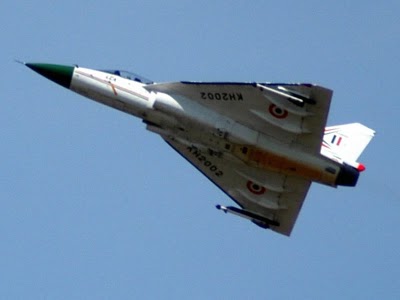
The first squadron of the indigenous Light Combat Aircraft (LCA) Tejas will be raised in Bangalore.

The Aircraft and System Testing Establishment (ASTE) will conduct a series of tests before the aircraft is inducted into the Indian Air Force.

Commandant of the ASTE, Air Commodore BR Krishna said that two pilots have been identified by the Bangalore-based flight testing establishment for carrying out extensive tests.

The first unit of LCA will be named No.45 Squadron. The squadron comprising 20 aircraft will be known as 'Flying Daggers' and will later be moved to the Sulur Air Base near Coimbatore.

Friday, February 11, 2011

It is already known as the world’s biggest defence import deal in a long time. Now, it transpires, it is even bigger than that. The Indian Air Force is in the market to buy 126 Medium Multi-role Combat Aircraft (MMRCA) from one of six foreign vendors bidding for the contract.

Over time, however, the IAF plans to buy 260 of them, Deccan Chronicle has learnt. That means, what has been talked about as a $10-12 billion deal will eventually fetch the winner of the contract close to $25 billion.
While the IAF floated a request for proposal (RFP) for only 126 fighters, sources privy to the armed forces’ Long-Term Integrated Perspective Plan said that that document puts the number of medium fighter jets the IAF needs at is 260. Ministry of defence officials, however, refused to confirm that there was any plan beyond the current RFP.

 America’s Lockheed Martin (F-16) and Boeing (F/A-18), the 4-nation Eurofighter consortium (Typhoon), France’s Dassault (Rafale), Sweden's SAAB (Gripen) and Russia’s Mikoyan-Gureyvich (MiG-35) are locked in a high-intensity public relations as well as behind-the-scenes war to win the contract.

Air Chief P.V. Naik had on Thursday said that the Contract Negotiations Committee would achieve key milestones towards evaluating the packages offered by the various vendors in a week or two and that the contract would be ready for signing by September, except if "dissatisfied vendors put a spoke in the wheel".

That, sources said, looked almost inevitable given the size of the contract and what it could do to the fortunes of the winner. It could potentially keep alive assembly lines for some fighters from the 1970s/1980s vintage for another 30 years, ensuring that some 25,000 to 30,000 people would find employment in what are currently stricken economies in the US and Europe.

The sources also said that the eventual number of the frontline air superiority Sukhoi-30 MKIs from Russia in the IAF's fleet would also go up to 280.

The IAF would need these higher numbers of combat jets of different classes considering that it has to plan for threats coming from two fronts.

Thursday, February 10, 2011

US Doubts HAL's Capability For MRCA

Washington has expressed serious doubts on the ability of Hindustan Aeronautics Ltd (HAL) to handle projects like the MMRCA, dubbing it "untested and suspect". This drew a sharp response from a defence ministry official, who pointed out the defence PSU was already engaged in producing a frontline "air dominance" fighter like Sukhoi-30MKI with Russia's help.

As per the MMRCA contract, which India hopes to ink this year, 18 jets will be bought off-the-shelf from the foreign vendor finally selected, while the rest will be manufactured by HAL in India after transfer of technology.

Two American fighters, F/A-18 'Super Hornet' ( Boeing) and F-16 'Falcon' ( Lockheed Martin), are in the race to bag the project, which is the largest fighter deal going around the world at this time. The other jets, which have undergone the gruelling field trials by IAF, are the Swedish Gripen (Saab), French Rafale (Dassault), Russian MiG-35 (United Aircraft Corporation) and Eurofighter Typhoon (consortium of British, German, Spanish and Italian companies).

 The Financial Times on Friday reported that US ambassador to India Timothy Roemer, in a confidential cable last year, had held India's aviation industry as "two to three decades behind the US and other western nations" despite some advances.


"The potential for HAL to successfully partner with US firms on a truly advanced aircraft remains untested and suspect," said Roemer, in the cable now leaked by WikiLeaks and "seen" by the British newspaper.

After a trip to HAL facilities in Bangalore in February 2010, Roemer also expressed surprise at the lack of automation and safety precautions at the HAL plant. US companies need to "approach partnerships carefully to understand the management and technological experience of Indian firms", he said.

Wednesday, February 9, 2011

Roadmap Revealed for the Development of Medium Combat aircraft MCA


The head of India's Aeronautical Development Agency revealed key details of the roadmap for development of the proposed indigenous medium combat aircraft (MCA) in an interview.
ADA will complete a feasibility study on the MCA by the end of 2011. The study will be submitted to the Indian government and air force, and discuss key aspects of the programme, says PS Subramanyam, programme director at the ADA. 
The study will consider several areas: the number of MCA prototypes, prototype timelines, funding, and production schedules for the final aircraft. 
"The MCA will be in flight trials by end of the decade, and it will be inducted by the middle of the next decade," says Subramanyam.
Subramanyam also discussed how the MCA will fit into the Indian air force's future force structure. It will be a 20t aircraft with a 1,000km range, fitting between the 10t, 500km range of the Hindustan Aeronautics Tejas, and the 30t, 1,500km range of the fifth generation fighter aircraft (FGFA), an Indian variant of the developmental Sukhoi PAK FA. 
Therefore, Subramanyam says, the MCA "does not clash" with the FGFA. He says the MCA will be comparable to the Lockheed Martin F-35, and the FGFA comparable to the F-22 Raptor. 
The MCA will be a single seat fighter. A two seat version will be developed, but primarily as a trainer. A naval variant is not envisaged, but Subramanyam foresees a requirement for a 20t aircraft for India's future indigenous aircraft carriers. A naval variant of the Tejas was rolled out in mid-2010. It is likely to have its first flight this year.
In a recent interview with Flight Daily News, IAF Air Chief Marshal Pradeep Vasant Naik said the MCA will be a medium weight combat aircraft with low observable features and a payload capability of more than five tons. It will have swing role capability and "provide greater flexibility in the application of aerospace power". 
The ADA has previously said the MCA will have "serpentine-shaped" air intakes, internal weapons bays, and advanced radomes to increase its stealth features. Radar-absorbing composites and paints will supplement the design.
It will be powered by two Kaveri engines optimized for low observable characteristics. The Kaveri, which has suffered considerable delays, is still in development, and will eventually replace General Electric engine in the Tejas.

linkwithin

Related Posts Plugin for WordPress, Blogger...
© Copyright 2012-2013 — Asian Defence News. All Rights Reserved