Showing posts with label Australia. Show all posts

Monday, May 27, 2013

The First Australians have Complete Initial MH-60R Qualifications

Another DMO MH-60R milestone
A milestone has been achieved by the AIR 9000 Phase 8 Project Office, with members of the Integrated Test Team (ITT) being the first Australians to complete their initial MH-60R (Romeo) qualifications.
LCDR Simon Lam (Aerosystems Qualified AvWO and MH-60R T&E Manager), LCDR Joshua Carey (USNTPS Qualified Test Pilot and MH-60R Test Pilot) and LEUT Timothy Clerke (Flight Test Engineer) form the MH-60R test team embedded into the DMO to support the introduction of the MH-60R. LCDR Lam and LCDR Carey recently completed their MH-60R NATOPS Evaluations with HSM 40 at Naval Air Station (NAS) Mayport, Florida.
The pair commenced their training with other aircrew from NUSQN 725 in early March. After a significantly compressed 9 weeks of accelerated study, computer based learning, simulators and flights they completed their final NATOPS Evaluation on 15 May 2013. The NATOPS check consisted of an open and closed book examination, oral examination, a simulator evaluation and a flight evaluation. The examinations and evaluations focused on ensuring LCDR Lam and LCDR Carey had a comprehensive understanding of the aircraft systems, HSM-40 SOP’s, United States (US) Airways and all Emergency actions in event of an aircraft malfunction. The process was designed to ensure they met the standards required to safely operate the MH-60R and also operate within US airspace. This now means they are the first Australians qualified on MH-60R as part of AIR 9000 Phase 8.

Saturday, May 4, 2013

Australia Defence White Paper: Key Points


THE key elements of the Gillard government's defence white paper, released today.
Main technology decisions:


Australia remains committed to buying the advanced Lockheed Martin F-35 Joint Strike Fighters.
Australia to buy an additional 12 Boeing Super Hornets, configured in the electronic warfare Growler version, giving the RAAF a total of 36.
Government committed to buying 12 new submarines, based on an evolved version of the Collins class. Rules out buying an existing model from a European manufacturer.
Navy supply ships HMAS Sirius and HMAS Success will be replaced.
Government to ramp up plans to replace the navy's Armidale-class patrol boats.

Tuesday, January 29, 2013

Australian air force faces strike fighter gap

Australia will almost certainly be forced to buy 24 new Super Hornet fighter planes for about $2 billion to plug a looming gap in its air defences caused by delays in the purchase of the cutting-edge Joint Strike Fighter.
According to a leaked draft of the 2013 defence white paper, Australia will take delivery of just two Lockheed Martin JSFs by 2020, indicating the government will need to buy a batch of rival Boeing F/A-18F Super Hornets, which are cheaper but older and less stealthy than the fifth-generation JSF (pictured).
''By the end of this decade, the ADF will . . . take delivery of three air warfare destroyers, two landing helicopter dock amphibious ships and the initial two F-35A Joint Strike Fighter aircraft,'' the white paper states.
While switching to the Super Hornets would not be a slug to the government budget - each is about $40 million cheaper than a JSF - it may mean money is wasted on training and maintaining two different types of fighters.
And some experts say the Super Hornet would be challenged by some of Australia's neighbours' growing air combat capabilities.
The white paper states the government ''remains committed'' to acquiring the JSF but makes no mention of the next batch of 12 planes, which were expected around 2020.
This appears to confirm what Defence Minister Stephen Smith has hinted at and many experts have suspected: that Defence will replace some of the retiring classic Hornet aircraft with Super Hornets and end up with a mixed fighter fleet rather than the 100 Super Hornets originally proposed. Mr Smith has already asked the US about the price and availability of more Super Hornets.

Friday, January 25, 2013

Special delivery Down Under as Australia Receives icts 6th C-17

Australia's sixth C-17 Globemaster III Officially Welcomed was to the Royal Australian Air Force fleet falling on a ceremony in late RAAF Base Amberley at 2012. The C-17 is seen around the world responding to disasters and natural Delivering Humanitarian Aid.

Citing a growing need for airlift, the Australian government has procured fifth C-17 Globemaster III in 2011 and then contracted for a sixth aircraft in June 2012. Both C-17s Were Delivered in record time due to the strong cooperation Among the Australian and U.S. gouvernements working with the Boeing team.

"I recall a day in October 2011 When We Greeted the fifth here and I Said to the chief of the Air Force On That Day, and to the men and women of the Amberley base, that 'I like the fifth one so much we might buy a sixth one and we did, "Said Minister for Defence Stephen Smith. "And we got it in record time," he added.


The sixth C-17 Officially Welcomed was at Royal Australian Air Force Base Amberley in late 2012 Following a first ever fly past over Brisbane and the Gold Coast of Australia. The newest member of the RAAF C-17 fleet Carried a specialist medical team and, along with three other RAAF C-17s carrying various loads, showcased the versatility of the Globemaster III.

Saturday, January 19, 2013

New treaty to formalise defence co-operation with Australia

The UK and Australia will strengthen their long-standing relationship today with a new defence treaty to provide a framework for the many strands of co-operation between the 2 countries.

The treaty, to be signed in Perth today, Friday 18 January, with the Australian Defence Minister Stephen Smith, will see the 2 countries working together in areas such as cyber security, defence reform, personnel exchange, equipment, and science and technology.

Defence Secretary Philip Hammond and the Foreign Secretary William Hague are in Perth attending the annual Australia/UK ministerial summit. Last year the corresponding event was held in London.

During their trip, in one of the first examples of the closer relationship, Mr Hammond visited the Australian Naval Base and BAE Systems shipyard in Perth where they discussed a range of issues relating to the sustainment and development of Australia’s submarine programme and future shipbuilding.

With both Britain and Australia due to build new frigates in the coming years, the Defence Secretary agreed with his Australian counterpart to explore the possibility of co-operation over mutual design work for the Royal Navy’s new Type 26 Global Combat Ship - a design that could meet the needs of the Royal Australian Navy.

Friday, January 18, 2013

Australia's top secret sites uncovered by Google Earth


View Larger Map


Top Secret Sites
Top Secret sites: one of the world's biggest spy bases is located in the middle of Australia at Pine Gap, NT. Picture: Google Earth Source: Supplied
AUSTRALIA's most secret sites are hidden well away from prying eyes, usually far from major population areas. But no one escapes the all-seeing eye of Google.
Top Secret Sites
Top Secret sites: one of the world's biggest spy bases is located in the middle of central Australia at Pine Gap, NT. Source: Supplied

Wednesday, January 16, 2013

Wallaby Airlines Returns to Air Force

The Chief of Air Force Air Marshal Geoff Brown welcomed the re-establishment of No.35 Squadron today at RAAF Base Richmond. 

“The re-establishment of No.35 Squadron will see it prepare for our fleet of ten C-27J Spartan Battlefield Airlift aircraft, due to arrive in Australia from 2015,” Air Marshal Brown said. 

“No.35 Squadron has provided combat airlift for Australia in several conflicts, and the C-27J is ideally suited to continue this legacy of support for personnel deployed on combat, peacekeeping, or disaster relief operations,” Air Marshal Brown said. 

No.35 Squadron will be re-established under the command of Wing Commander Brad Clarke with 25 personnel but will grow to approximately 250 members after the first C-27Js arrive in 2015. 

“Our first tasks are to work with the Battlefield Airlift Transition Office to map the required workforce structure, operating procedures and introduction plan for the C-27J Spartan,” Wing Commander Clarke said. 

“No.35 Squadron will send the first aircrew and maintenance personnel to train on the C-27J in the United States in 2014.” 

“Once in service, our C-27Js will greatly increase the number of airfields Defence can operate in to, increase the level of fixed wing support available on the battlefield, and synchronise with the existing C-130J Hercules and C-17A Globemaster fleet,” Wing Commander Clarke said. 

Tuesday, January 15, 2013

EF88: Australia’s Next-Generation Assault Rifle

EF88 with 16” barrel shown with Ase Utra suppressor, Trijicon TA44SR-10 1.5×16 ACOG, and folding foregrip. Centre: EF88 with 20” barrel, fitted with Trijicon 4×32 BAC ACOG, Madritsch ML40AUS grenade launcher, and Thales Australia-designed quadrant sight with mounted Trijicon RMR. Bottom: F88SA2 (current Australian Defence Force service rifle) with RM Equipment M203PI grenade launcher, Knight’s Armament Company quadrant sight, and standard 1.5x ring sight. 

In September 2012, I had the opportunity to visit Lithgow (New South Wales, Australia) at the invitation of Thales Australia in order to conduct a Test and Evaluation (T&E) of their Enhanced F88 Assault Rifle. This weapon is being developed for the Australian Defence Force (ADF) under the Land 125 Phase 3C program. Pending the results of Department of Defence testing, this rifle will be in the early stages of manufacturing in 2014. A version of the EF88, with several minor differences, is being marketed globally by Thales as the F90, drawing directly on the Australian small arms experience. The EF88 is the latest iteration of the long-serving F88 Austeyr; this updated weapon has been designed and produced more than 20 years after the first F88 rifles entered service in Australia, and over 35 years since the Steyr AUG on which it is based was first designed in Austria. Fundamentally, the EF88 remains much the same as its predecessors: a bullpup-configuration selective fire weapon, chambered for the 5.56x45mm NATO cartridge, short-stroke piston operated and firing from a closed bolt.

Friday, January 11, 2013

Australian military testing new special forces fighting machine

Australian special forces are testing the latest machine from British military contractor Supacat.
The REDFIN 1B is a custom version of the company’s High Mobility Transporter (HMT) Extenda that’s built on a modular platform that can be outfitted as either a 4x4 or 6x6 while accommodating a host of weapons systems, as well as mine and ballistic protection kits.
The HMT is typically fitted as an open top vehicle to make entry and exit easy for crews wearing bulky battle gear. A turret with high-caliber rifle mount is positioned behind the driver, who is situated above the front wheels.
Many of the details on the REDFIN are still top secret, but the HMT Extenda is typically powered by a 6.7-liter Cummins diesel engine, has a top speed of around 75 mph and can ford water over a meter deep. Despite its size, an air suspension allows the big truck to kneel down in order to squeeze into a Chinook-sized helicopter for quick response missions.
The Australian Defence Force will evaluate the REDFIN over the next few months to determine if any

Sunday, December 23, 2012

General Dynamics Delivers Digital Video Exploitation System to Australian Army

System helps manage large volumes of full motion video and turns data into real-time actionable intelligence for forward-deployed forces

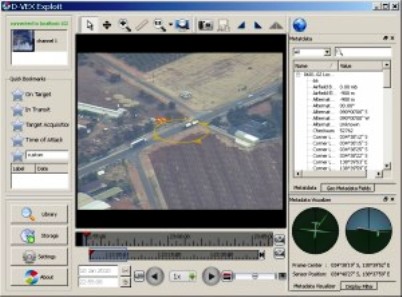
CANBERRA, Australia - General Dynamics Mediaware has delivered two video capture and exploitation D-VEX systems to the Australian Army, enhancing the distribution of mission-critical, actionable intelligence among Australian troops and coalition forces. The systems have been integrated into the Shadow 200 Tactical Unmanned Aerial System (TUAS) operating in Afghanistan.

D-VEX is a versatile and portable video exploitation system that captures and manages full motion video from airborne surveillance platforms. Designed for in-theater operations, the system also works with commercially-available compact mobile hardware, such as a laptop.

"D-VEX provides the Australian Army with next-generation tools for real-time and forensic analysis of airborne surveillance video," said Michael Manzo, director of General Dynamics Advanced Information Systems' Geospatial Solutions Imagery Systems division. "It will enhance and streamline the Army's ability to derive timely, relevant and accurate geospatial intelligence from the Shadow TUAS."

With the ability to record and index video with metadata to derive real-time actionable intelligence, D-VEX provides users with detailed forensic analysis through its comprehensive search and mark-up capabilities. D-VEX also supports open defence standards, including the Motion Imagery Standards Profile (MISP) and STANAG 4609.

Thursday, December 20, 2012

Final assembly of the first C-27J Spartan for the Royal Australian Air Force started

The fuselage of the first C-27J for the Royal Australian Air Force (RAAF) has arrived at the Alenia
Aermacchi Turin plant for final assembly.
Manufactured at Alenia Aermacchi’s Capodichino Naples site, the fuselage, reached Turin both by truck
(from Capodichino to the Port of Naples and from Genoa to Turin) and sea freight (from Naples to Genoa).
The Australian order for 10 aircraft was placed through the US Foreign Military Sales Joint Cargo Aircraft
program last May.
The first C-27J will arrive in Australia in early 2015, and will be used for tactical airlift. They will replace the
piston-engine Caribou, which were retired in 2009 after 45 years of service.

Tuesday, December 11, 2012

The Australian Tiger bound to earth by drivers

The recurrent appearance of smoke in the cockpit prompted several helicopter pilots Tiger Australian Army to halt flights against the advice of their superiors. Twenty pilots have already left the army 

Dozens of drivers of the Australian Army conducted a mini-revolt up to "strike" by refusing to fly on their ARH Tiger attack helicopters. Several crews were hampered by smoke from the cockpit for the third time this year.

The last warning was held at the training center military Cultana in South Australia on November 4.Previous incidents had taken place in March and July 2012. Helicopter fleet has not yet been pinned down after the third incident.

"The crew applied the standard procedure in the event of smoke or fumes in the cockpit and landed safely at the airfield of El Alamein," said an official of the Ministry of Defence of Australia.

Angered by the decision of their superiors not to suspend the flights, the crews of the 1st Aviation Regiment based in Darwin voted against the continued operation until all safety issues are resolved. A rare occurrence in the army may be likened to the mutiny. Many drivers of the Australian Army have also been shocked that their colleagues can vote and refuse to fly, defying their superior officers who had found the helicopter operations.

"Usually, it takes rather fight to prevent a pilot to fly," said an anonymous army.
Tiger flights were temporarily paused in March and July 2012 due to smoke. But since 2007 the cockpit Tiger still recorded 24 incidents of smoke.

For its part, the Australian Department of Defence has refused to recognize that the pilots had refused to fly effectively. He nevertheless acknowledged the concerns and said that crews flying lull was not uncommon during the maintenance phase.

The Ministry of Defence also confirmed that the 1st Aviation Regiment had not flown since the incident at the training center of Cultana November 4.

"No flight ARH (Armed Reconnaissance Helicopter Tiger) has been programmed by the 1st Aviation Regiment in Darwin since the incident Cultana to smoke," said he confirmed.

Saturday, December 1, 2012

Weapons stolen from Australian navy vessel

An intruder robbed an Australian navy vessel of a cache of weapons Friday after overpowering military personnel on guard, the defence department said, in an unprecedented security breach.

The Australian Department of Defence said the infiltrator "overwhelmed a duty member onboard a patrol boat" which was moored at HMAS Coonawarra, a naval base in the northern city of Darwin.

"The intruder overpowered the duty member, accessed the vessel's armoury and removed a number of weapons," it said in a statement, without specifying what arms were taken.

"The person then departed the vessel with the weapons."

Reports said firearms usually found on an Armidale-class patrol boat could include machine guns, assault rifles, shotguns and 9mm pistols, as well as ammunition.

The Australian Broadcasting Corporation said a single intruder armed with a gun tied up a crewman in the attack, which took place at the Larrakeyah Naval Base, which was later placed in lock-down.

"Police received a report just before 1:00 am that a Defence member had been assaulted and a cache of weapons had been stolen from a navy patrol boat moored at the base," Northern Territory police Commander Richard Bryson said.

"Police have locked down the base with all vehicles exiting being searched."

Tuesday, November 27, 2012

Australia and Papua New Guinea Complete Naval Exercise

Defence ties between Australia and Papua New Guinea were strengthened during Exercise Paradise in waters off Cairns.

Two Royal Australian Navy heavy landing craft, HMA Ships Labuan and Tarakan, spent a week at sea with two PNG Defence Force patrol boats,  HMPNG Ships Moresby and Rabaul.  Armidale-class patrol boat HMAS Bundaberg also contributed to the exercise while in transit to border protection operations.

Lieutenant Commander Steve Woodman, Commander Minor War Vessel Sea Training, said the annual exercise is an important opportunity to develop teamwork between our two nations.
“During Paradise, our vessels undertook a range of exercises that became progressively more challenging and tested the seamanship and mariner skills of all participants,” LCDR Woodman said.

Thursday, November 15, 2012

GE Delivers LM2500 Gas Turbines for Royal Australian Navy's Third Air Warfare Destroyer

GE Marine reports it has delivered two LM2500 aeroderivative gas turbines to ASC in Adelaide, Australia. The LM2500s will power the Royal Australian Navy’s (RAN) third Air Warfare Destroyer (AWD).

Wednesday, October 24, 2012

Controversial report recommends Federal Government lease nuclear subs to save $10b

AUSTRALIA could save $10 billion by leasing nuclear-powered Virginia Class submarines from the US, says a Centre for Independent Studies report.
Author Simon Cowan also claimed it could save up to $0.75 billion a year in operation and maintenance costs.
The Future Submarine Project Should Raise Periscope for Another Look report from one of the country's most influential think tanks, said arguments against buying nuclear-powered submarines didn't stand up to scrutiny.
And it found leasing the fast attack submarines could avert "a potentially disastrous capability gap developing" between when the six Collins Class are retired and the replacement diesel-powered submarines are designed.
The project is expected to cost $36 billion. The Government has previously ruled out the nuclear option.
Opposition leader Tony Abbott, who previously had a former Centre for Independent Studies research fellow as an adviser, deferred to Defence spokesman David Johnston for a response.
Senator Johnston showed no sign of backing its contents, saying: "The Coalition is not considering a nuclear-powered option" and "work on the project will centre around the South Australian shipyards".
The report went on to rebut claims that Australia could not buy nuclear-powered submarines because it does not have a supporting nuclear industry.
Using a leasing arrangement meant the US could service the subs and also get rid of spent nuclear fuel, it said.

Friday, October 19, 2012

Northrop Grumman to Build Cyber Test Range in Australia

orthrop Grumman Corporation (NYSE: NOC) has been awarded a contract to build a cyber test range for the University of New South Wales (UNSW), Canberra campus at the Australian Defence Force Academy (ADFA) in Australia.
The ADFA is a partnership between the Australian Defence Force and the University of New South Wales. ADFA's primary mission is training and educating the future leaders of the Royal Australian Navy, Army and Air Force. That training and education is supported by world-class research, including the burgeoning area of cyber research.

Thursday, October 18, 2012

Landing Helicopter Dock Hull Arrived in Australia

Minister for Defence Stephen Smith and Minister for Defence Materiel Jason Clare today announced that Australia’s largest ever warship has arrived in Australia.

The hull of the first of two Landing Helicopter Docks (LHD) has been transported from Spain to Australia by a Heavy Lift Ship, Blue Marlin.

The Canberra Class LHDs are bigger than Australia’s last aircraft carrier HMAS Melbourne.

The hull is 230m long and 32m wide, making it the same length as the Rialto Tower in Melbourne.

The height from waterline to the aft mast is just 40cm lower than the deck of the Sydney Harbour Bridge.

The flight deck on the LHD is as big as 24 tennis courts and could fit four ANZAC Class frigates.

The LHD will be equipped with a hospital that could treat a town the size of Warrnambool and it generates enough electricity to power a city the size of Darwin.

The arrival is a significant milestone and marks the next step towards a new era for Defence’s amphibious force capability.

Construction of LHD 01 began in September 2008. The first three blocks were laid down in September 2010 and the hull was launched in February 2011.

The hull was constructed in Spain by shipbuilder Navantia and has taken around nine weeks to complete the 13,000 nautical mile voyage to Australia.

The hull will now be unloaded and moved by tug to the BAE Systems’ Williamstown dockyard for consolidation of the superstructure and other critical fitout work.

LHD 01, to be commissioned HMAS Canberra, is the first of two LHDs being built for the Royal Australian Navy.
The introduction into service of these ships will mark a significant change in the way the Australian Defence Force (ADF) deploys its land forces and conducts amphibious operations.

The LHDs are the largest ships ever built for the RAN.

Each ship with its crew of around 300 personnel can also carry and embark a combined armed battlegroup of more than 1100 personnel, 100 armoured vehicles and 12 helicopters, and features a 40-bed hospital.

Work on LHD 02, to be commissioned as HMAS Adelaide, began in February 2010. The first hull blocks were laid down in February 2011.

The hull of LHD 02 was launched in July 2012 and is due to arrive in Australia for superstructure completion and fitting out in early 2014.

The LHD 01 is expected to be introduced into RAN service in 2014. LHD 02 is expected to follow in 2016.
BAE Systems is the Prime Contractor for the LHD project and is managing the overall project in cooperation with subcontractors Navantia, Saab and L-3 Communications.

Saturday, October 6, 2012

Aust invests in maritime aircraft project

AUSTRALIA will commit further funds toward the development of Boeing P-8A Poseidon maritime patrol aircraft, to replace the RAAF's ageing AP-3C Orions from the end of this decade.
Defence Minister Stephen Smith and Minister for Defence Materiel Jason Clare have signed a new agreement with the United States Navy to participate in the third P-8A development stage, contributing $73.9 million towards the project.
That formalises Australia's ongoing participation in the US$5 billion project.
Mr Smith said Orions had served Australia but they would eventually be replaced.
"We will ultimately replace our Orion P-3s with the P-8. That is a long-term project," he told reporters at RAAF Amberley in Queensland.
"The Orions are expected to remain in service until the end of this decade or the start of the 2020s. But we have committed ourselves to further work on the P-8 project in collaboration with our United States colleagues."

Sunday, September 30, 2012

Royal Australian Air Force has been warned to scale back the use of its ageing fleet of F/A-18 "classic" Hornet fighters to avert structural fatigue concerns

THE Royal Australian Air Force has been warned to scale back the use of its ageing fleet of F/A-18 "classic" Hornet fighters to avert structural fatigue concerns.
The 71 fighter jets, brought into service in the mid-1980s, may need to keep flying beyond 2020 because of delays in acquiring the new Joint Strike Fighter, the Australian National Audit Office said yesterday.
It warned to expect a big increase in annual maintenance costs of the old Hornet fleet from $118 million since 2001 to $170m today, with costs expected to blow out to $214m a year by 2018. The report found all but nine of the Hornet fleet had "experienced structure fatigue above that expected for the airframe hours".
The ANAO's upkeep concerns are directed at the "classic" Hornets and not the newer fleet of 24 F/A-18F Super Hornets delivered to RAAF Amberley between 2010 and last year.
"The key risks to the F/A-18 fleets' fulfilment of their operational requirements until their replacement by the F-35A Lightning (JSF) revolve around Defence's ability to maintain the present levels of Hornet sustainment and structural-integrity management," the report said.
Keeping the old Hornet fleet flying beyond 2020 would incur an extensive increase in sustainment costs, ANAO said.
It "may well require the fleet to undergo an expanded, and hence more costly, safety-by-inspection regime, structural modifications program and capability upgrades".
The government has indicated it will buy 100 new Lockheed Martin-built F-35 Joint Strike Fighters, to replace the Hornet fleet in a deal worth $13.2 billion.

linkwithin

Related Posts Plugin for WordPress, Blogger...
© Copyright 2012-2013 — Asian Defence News. All Rights Reserved